How Much Should You Spend on an Engagement Ring? A Realistic Guide
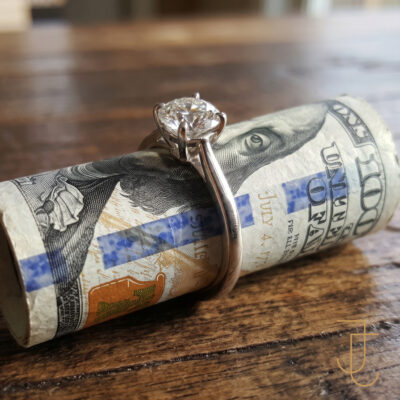
Choosing an engagement ring is one of the most meaningful purchases you may ever make. It represents commitment, love, and the beginning of a shared future. But alongside the excitement of finding the right design, there is often one important question: How much should you spend on an engagement ring?
You may have heard that an engagement ring should cost two or three months’ salary. Perhaps you have been comparing diamond sizes, browsing different metals, or wondering whether a custom-designed ring is the right choice for you.
The truth is that there is no universal amount you should spend on an engagement ring. The right budget depends on your financial circumstances, your partner’s preferences, the design you have in mind, and what feels comfortable for your future together.
At JewelryThis, we believe that choosing an engagement ring should be about finding the right balance between meaningful design, quality craftsmanship, and financial peace of mind. Here is how to approach your engagement ring budget with confidence.
How Much Should You Spend on an Engagement Ring?
You should spend an amount on an engagement ring that fits comfortably within your financial circumstances without compromising your essential expenses, savings, or future goals. There is no fixed salary multiple or universal spending rule you need to follow. Your budget should reflect your priorities, your partner’s preferences, and the type of ring you want to create.
For some couples, that may mean choosing a beautifully understated solitaire. Others may prefer a custom engagement ring featuring a distinctive setting, a larger centre stone, or meaningful personal details.
Neither approach is inherently better than the other.
What matters most is choosing a ring that feels right for your relationship and your finances. A thoughtful purchase should bring excitement, not months of financial stress.
Is the Two- or Three-Month Salary Rule Still Relevant?
One of the most common questions about engagement ring budgets is whether you should spend two or three months’ salary on a ring.
This traditional guideline has influenced engagement ring shopping for decades, but it is not a financial requirement.
Where did the engagement ring salary rule come from?
The idea that an engagement ring should cost a certain number of months’ salary became widely known through jewellery advertising campaigns that associated a higher ring budget with greater commitment.
Over time, the guideline became familiar enough that many people began treating it as a standard expectation.
However, there is no universal financial principle that says an engagement ring should cost two or three months of income.
Why the traditional rule may not suit everyone
Your income alone does not tell the whole story about what you can comfortably afford.
Two people earning the same salary may have very different financial circumstances. One might have minimal expenses and substantial savings, while another may be supporting a family, repaying a mortgage, or paying off student loans.
Other important considerations include:
- Monthly living expenses and existing financial commitments.
- Emergency savings and upcoming life expenses.
- Plans for a wedding, honeymoon, home, or family.
- Personal preferences regarding jewellery and design.
- Whether you are comfortable making a larger purchase at this stage of your life.
Following a salary-based rule without considering these factors could mean spending more than is sensible.
What should you focus on instead?
Rather than starting with a salary multiple, establish a realistic budget based on what you can comfortably spend.
Think about the ring you want to give, the features that matter most, and the amount you can allocate without creating financial pressure.
An engagement ring is a symbol of your future together. It should complement that future rather than compete with other important goals.
What Determines the Cost of an Engagement Ring?
Engagement rings can vary considerably in design, materials, and craftsmanship. Understanding the factors that influence cost will help you make informed decisions and identify where your budget will have the greatest impact.
1. Diamond size and quality
For diamond engagement rings, the centre stone is often one of the most significant factors influencing the overall cost. Diamond pricing is affected by the familiar 4Cs: cut, colour, clarity, and carat weight.
Cut: A diamond’s cut influences how effectively it reflects light. A well-cut diamond can appear lively and bright, making cut quality an important consideration when choosing a centre stone.
Colour: In traditional colourless diamond grading, less noticeable colour generally commands a premium, although the best choice depends on the appearance you prefer.
Clarity: Clarity describes internal characteristics called inclusions and external characteristics called blemishes. Many inclusions are difficult to see without magnification, so the most expensive clarity grade is not automatically necessary for an attractive ring.
Carat weight: Carat measures a diamond’s weight, not its visible size alone. Two diamonds of the same carat weight may appear different in size depending on their proportions and shape.
These characteristics interact, so it is worth considering the diamond as a whole rather than focusing on a single grading factor.
For example, you may prefer a well-proportioned diamond with beautiful light performance over a heavier stone that stretches your budget. The right balance depends on your priorities.
2. Natural diamonds versus lab-grown diamonds
The origin of your diamond can also influence the cost of an engagement ring. Natural diamonds form through geological processes over long periods. Lab-grown diamonds are produced using technological processes that replicate the conditions needed for diamond growth.
Both have essentially the same chemical composition and crystal structure, and both can display the characteristic brilliance associated with diamonds. The differences lie in their origin, market positioning, and typically their price;
Lab-grown diamonds generally cost less than comparable natural diamonds, which may allow you to prioritize a larger stone, a different setting, or additional design details within your budget.
Natural diamonds appeal to buyers who value geological origin and the traditions associated with mined gemstones.
Neither choice is automatically right for every couple. Consider your preferences, the diamond’s grading information, the documentation provided, and your expectations about future resale value. Neither natural nor lab-grown diamonds should be treated as guaranteed financial investments.
3. Metal choice: Gold, platinum, and other options
The metal you choose affects the appearance, durability, maintenance, and cost of your engagement ring.put this section into a table:
| Metal | Appearance | Key Characteristics |
|---|---|---|
| Yellow Gold | Warm, classic appearance | Complements many diamond and gemstone colours and offers a timeless look. |
| White Gold | Bright, contemporary appearance | May require periodic rhodium plating, depending on the alloy and finish, to maintain its bright white appearance. |
| Rose Gold | Warm pink tone | Creates a romantic, modern aesthetic and offers a distinctive alternative to traditional gold colours. |
| Platinum | Naturally white appearance | Valued for its durability and suitability for fine-jewellery settings. Its density, purity, and working characteristics can influence the finished ring’s cost. |
| Sterling Silver | Bright, silvery appearance | A precious-metal option for certain designs. However, its softness and wear characteristics can make it less suitable for some engagement ring settings, particularly those holding valuable centre stones intended for everyday wear. |
The best metal depends on the design, lifestyle, preferred colour, and maintenance expectations. A knowledgeable jeweller can help you assess the trade-offs before making a decision.
4. Setting style and design complexity
The ring setting affects both its appearance and the craftsmanship required to create it.
A simple solitaire setting places the focus on a single centre stone. Halo settings surround the centre stone with smaller diamonds or gemstones, creating a different visual effect. Three-stone designs, pavé bands, intricate galleries, and detailed engraving can add further complexity.
Custom details may include:
- A distinctive band profile.
- Hidden gemstones or personal engravings.
- A setting inspired by a meaningful object or memory.
- A combination of metals or complementary gemstones.
- Carefully designed proportions to suit the wearer’s hand.
More intricate designs may require additional design work, production time, and setting expertise. However, a simple ring can be just as meaningful as an elaborate one. The goal is to choose a design that reflects your partner’s style and will be comfortable to wear for years.
5. Craftsmanship and quality assurance
An engagement ring is more than the sum of its materials. The precision of the setting, the security of the centre stone, the finish of the band, and the overall construction all influence how the ring looks and performs over time.
When comparing options, ask about the materials used, gemstone specifications, setting method, quality checks, and aftercare arrangements. For a custom ring, it is also worth understanding how the design will be reviewed and approved before production. Good craftsmanship is not always visible at first glance, but it can make an important difference to the finished piece.
How to Set an Engagement Ring Budget You Feel Good About
A sensible budget starts with your financial circumstances, not the price of the first ring you fall in love with.
Here are five practical steps to help you make a confident decision.
Step 1: Understand your financial commitments
Start by reviewing your monthly income, essential expenses, existing debt repayments, and upcoming costs. Consider what you can allocate toward an engagement ring without affecting rent or mortgage payments, household expenses, emergency savings, or other important commitments. If you are planning a wedding or saving toward a home, remember to consider those goals as well.
Step 2: Choose a comfortable spending limit
Set a maximum budget before comparing rings. This gives you a useful framework for evaluating designs and helps prevent emotional decisions that lead to spending more than you intended. It can also be helpful to distinguish between your ideal budget and your absolute maximum. Your ideal budget is the amount you would prefer to spend; your maximum is the limit you do not want to exceed. You do not need to reach that maximum simply because it is available.
Step 3: Prioritize what matters most
Think about the features that will make the ring special to your partner. Is it the centre stone, the metal colour, a particular shape, a vintage-inspired setting, or a personal detail that tells your story? Choose two or three priorities and use them to guide your decisions. If the diamond is most important, you might keep the setting relatively simple. If the design itself matters most, you may prefer a distinctive custom setting with a carefully selected centre stone. This approach helps you allocate your budget intentionally rather than paying for features you do not particularly value.
Step 4: Account for the full cost of ownership
The purchase price is not necessarily the only expense associated with an engagement ring.
Depending on the ring and your circumstances, additional costs may include:
- Jewellery insurance or adding the ring to an existing policy.
- Resizing, where possible and necessary.
- Periodic cleaning and professional inspections.
- Repairs or maintenance over time.
- Wedding bands designed to fit alongside the engagement ring.
Ask what is included in the purchase and what services may incur additional charges. Understanding these details upfront helps you plan more accurately.
Step 5: Be cautious about borrowing
Financing may be available for some jewellery purchases, but borrowing should not be necessary to demonstrate commitment. Before accepting a payment plan, understand the interest rate, total repayment amount, fees, repayment period, and consequences of missed payments. If the repayments would interfere with essential expenses or other financial goals, consider a simpler design or waiting until you have saved enough. There is no disadvantage in choosing a ring that fits your circumstances today.
Can You Choose a Beautiful Engagement Ring on a Modest Budget?
Absolutely. A beautiful engagement ring does not have to be the largest or most elaborate design available. Thoughtful proportions, attractive materials, a well-chosen centre stone, and skilled craftsmanship can create a ring that feels exceptional without unnecessary extravagance. Here are several ways to make your budget work harder.
Consider diamond shape and proportions
Different diamond shapes create different visual effects. Oval, pear, marquise, and emerald cuts can each produce a distinctive appearance. The apparent size of a diamond depends on its shape, proportions, and how it is set, not just its carat weight. Explore different shapes to discover which ones appeal to you and work well with the ring design.
Explore different centre stone options
If your partner is open to alternatives, lab-grown diamonds and coloured gemstones may offer additional design flexibility. Sapphires, for example, are available in several colours and are commonly used in engagement rings because of their suitability for everyday jewellery. Other gemstones may also work beautifully, although their durability and care requirements differ. The stone should be selected with the intended setting and lifestyle in mind.
Keep the setting timeless
A thoughtfully designed solitaire or three-stone ring can be visually striking without extensive ornamentation. A simpler setting may also make the centre stone the focal point and provide a versatile look that works with different styles. Timeless does not mean plain. Small design decisions, such as the band profile, setting height, or shape of the prongs, can give a ring a distinctive character.
Consider a custom design
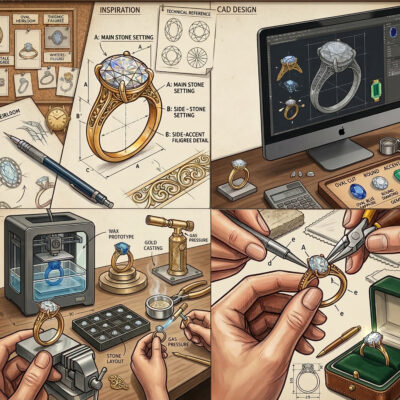
Custom design allows you to make decisions about the stone, metal, setting, and details rather than selecting every feature from a predetermined design. This can help you focus on what matters most to you and your partner. The key is to communicate your budget and priorities at the beginning of the process, so the design can be developed with those constraints in mind.
Can a Custom Engagement Ring Help You Stay Within Budget?
A custom engagement ring gives you the opportunity to create a piece that reflects your relationship, personal taste, and practical needs. It does not automatically cost less than a ready-made ring. The final cost depends on the materials, gemstones, complexity, craftsmanship, and production requirements. However, custom design can offer greater control over the features that matter to you.
Design around your priorities
Rather than beginning with a fixed design and paying for every feature it includes, you can work with a jeweller to identify the elements that matter most. For example, you might prioritize a particular diamond shape while choosing a simpler band. Alternatively, you could focus on intricate metalwork with a more modest centre stone. This flexibility allows the ring to reflect your preferences rather than someone else’s spending expectations.
Ask the right questions before proceeding
Before committing to a custom engagement ring, clarify:
- Which metals and gemstones are included in the design?
- What diamond or gemstone specifications have been agreed?
- Will you be able to review a design visualization before production?
- What is the expected production timeline?
- What changes are possible after approval, and could they affect the cost?
- What are the payment, cancellation, resizing, warranty, and aftercare policies?
Clear answers help you understand what to expect and make the experience more reassuring.
A custom engagement ring should be a collaborative process in which your ideas, budget, and expectations are understood from the beginning.
Engagement Ring Budget Mistakes to Avoid
Even with a clear budget, it is easy to become distracted by trends, expectations, or the pressure to find a ring that feels impressive.
Avoid these common mistakes when making your decision.
1. Spending to impress other people. Your engagement ring is a personal symbol. Other people’s expectations should not determine what you spend.
2. Assuming a bigger diamond is always better. Cut quality, shape, proportions, setting, and personal preference all contribute to the ring’s appearance.
3. Ignoring everyday wear. A beautiful design should also suit the wearer’s lifestyle. Consider setting height, stone security, maintenance, and comfort.
4. Overlooking material specifications. Confirm the metal, gemstone origin where relevant, diamond grading information, and agreed design details before proceeding.
5. Forgetting ongoing care. Insurance, inspections, and maintenance may be part of responsible long-term ownership.
6. Rushing into a decision. Take time to compare options, ask questions, and understand the policies that apply to your purchase.
7. Treating the budget as a target to reach. Your maximum budget is a limit, not a spending goal. If you find a ring you love for less, there is no reason to spend more simply because you can.
Choose an Engagement Ring That Reflects Your Relationship
So, how much should you spend on an engagement ring? The most sensible answer is an amount that allows you to choose a meaningful, well-made ring while remaining comfortable with your financial decision.
You do not need to follow an outdated salary rule, compete with someone else’s ring, or stretch your finances to create a memorable proposal. Instead, focus on the details that matter to your partner, the quality and suitability of the materials, and the design that best reflects your relationship.
Whether you prefer a timeless solitaire, a distinctive gemstone, or a completely custom creation, the right engagement ring is one chosen with care.
We believe that fine jewellery should feel personal from the first conversation to the finished piece. When you create custom jewelry the design approach allows you to explore different metals, gemstones, settings, and meaningful details to create a ring that truly reflects your story.
Frequently Asked Questions About Engagement Ring Budgets
How much should you spend on an engagement ring based on your salary?
There is no required percentage or number of months’ salary that you should spend on an engagement ring. Consider your disposable income, existing commitments, savings, and future goals. Choose a ring that fits comfortably within your financial circumstances rather than following an arbitrary rule.
Is three months’ salary enough for an engagement ring?
Three months’ salary is a traditional guideline, not a financial requirement. For some people, that amount may be more than they want to spend, while others may choose a different budget based on their preferences and circumstances. The right amount is the one that works for you.
Can you buy a beautiful engagement ring on a modest budget?
Yes. A carefully selected centre stone, a well-proportioned setting, and quality craftsmanship can create a beautiful ring at a range of budgets. Exploring different diamond shapes, lab-grown diamonds, alternative gemstones, and simpler designs can also help you find an option that suits your priorities.
Is a lab-grown diamond a good choice for an engagement ring?
A lab-grown diamond can be an excellent choice for someone who wants a diamond with essentially the same chemical composition and crystal structure as a natural diamond, often at a lower purchase price. Consider its grading, appearance, documentation, and your personal preferences when comparing options.
Does a custom engagement ring cost more than a ready-made ring?
Not necessarily, although custom design can involve additional design work and production requirements. The cost depends on the materials, centre stone, setting complexity, and craftsmanship. Custom design allows you to make choices around your priorities, but the finished ring should always be evaluated against a clearly agreed specification and budget.
What should you prioritize when choosing an engagement ring?
Start with your partner’s style, your comfortable budget, and the features that matter most. For a diamond ring, consider cut, colour, clarity, and carat weight together. Also evaluate the metal, setting security, everyday comfort, craftsmanship, and ongoing care requirements.
Should you finance an engagement ring?
Financing is a personal financial decision, but it is important to understand the interest, fees, repayment terms, and total cost before borrowing. If repayments would create financial strain or affect essential expenses, consider saving for the ring or choosing a design that fits your current budget.
Is a more expensive engagement ring a better engagement ring?
Not automatically. A higher price may reflect a larger or rarer gemstone, a particular metal, design complexity, or additional craftsmanship. However, the best ring is the one that suits the wearer, meets appropriate quality standards, and fits your financial circumstances. Price alone does not determine its emotional significance or suitability.