


HEC Letters Pendant — 14k Gold with Diamonds and Cutout Stars
$$$
14k yellow gold, natural diamonds
B. came to us wanting to turn a meaningful logo into a wearable pendant for someone else, keeping it as close to the original as possible — the HEC letters, a star detail, and diamonds all in one piece. Fitting both the stars and a full diamond outline took some back-and-forth on how to balance the two within the design. When it arrived he wrote: 'It's perfect, thank you once again.'
'It looks great! Let's make it!!!!' — on seeing the first render
'It looks amazing and I cannot wait to see it in person!!! Thank you so very much for taking the time and making this piece the way I envisioned and more.' — on shipping notification
'It's perfect, thank you once again.' — on delivery
Quick specs
Design type
Primary Metal
Shape / Cut
Primary Stone
Accent Stones
Design Complexity
Intent: Certainty
Size
Pendant approximately 1 inch wide.
How they made it distinctive
-
01
Cut-out construction chosen over a solid plaque so the letterforms have depth and an open, dimensional look
-
02
Continuous diamond outline traces all three letters rather than using scattered accent stones, for a cleaner line
-
03
Star motif worked into the open letterforms as a way to include a second meaningful element without crowding the diamond outline
-
04
Pendant sized larger than the original one-inch request specifically to make room for both the star detail and the full diamond line
-
05
No chain included by design, since the piece was a gift for someone who already owns one
How you'd make it yours
Stone type: this piece uses natural diamonds — a new commission could use lab diamonds for the same look at lower cost
Letter count: this piece spells three initials — a new commission could use two, three, or four letters depending on the name
Metal: this piece is 14k yellow gold — the same cut-out language works in white or rose gold
Symbol detail: this piece carries a star motif inside the letters — a new commission could use a different symbol in that space
One of a kind: this exact pendant was designed for one client's gift and is not reproduced — a new commission is an original piece inspired by this one, not a copy
Design changes made
The client initially asked for both a stars-and-stripes motif and diamonds throughout the letters. The team suggested outlining the letters in diamonds with the star detail worked into the center of the design instead, which required sizing the pendant slightly larger than the original one-inch request to accommodate both elements.
Who this is for
This piece is for someone giving a monogram gift that needs to feel more considered than an off-the-shelf nameplate — initials that double as a personal emblem. It's especially right if there's a specific reference, like a logo or existing symbol, that you want captured as closely as possible rather than a generic font choice.
How it's made
Once the 3D render was approved, the design was printed as a wax model on a 3D printer, then attached to a wax tree and set in a flask. The flask went into a kiln to burn out the wax, leaving a hollow mold, and molten 14k yellow gold was cast into that mold under pressure. After cooling, the piece was removed from the mold and prepared for finishing — a resin version was shared with the client to preview the form before the metal casting was finalized.
After casting, the pendant was cleaned and polished to bring the yellow gold to a mirror finish on the raised letter surfaces. The small round diamonds were then set by hand in a continuous line tracing the outer edge of each cut-out letter, while the star detail was left as an open, textured element inside the letterforms rather than set with stones.
Key note
The letters were cast as an open cut-out rather than a solid plaque, which is what allows the star detail to read as a dimensional element inside the letterforms rather than sitting flat on a background.
Pricing guidance
A diamond-outlined cut-out monogram pendant of this size and detail level sits in the upper-middle range for custom pendant work. Most of the cost comes from the continuous line of pave-set diamonds along each letter rather than the gold itself, since setting labor scales with the number of stones used to outline multiple letters. Choosing natural versus lab diamonds is the other major factor that moves the price within this category.
Moves price up ↑
- ↑ Choosing natural mined diamonds instead of lab-created diamonds for the outline stones
- ↑ Adding a fourth letter or lengthening the monogram, which increases the diamond count and setting time
- ↑ Upgrading from 14k to 18k gold
- ↑ Adding diamonds or detail to the back of the pendant as well as the front
- ↑ Increasing the pendant size beyond roughly one inch, which requires more metal and more stones to maintain proportion
Moves price down ↓
- ↓ Switching from natural to lab-created diamonds for an identical look at lower cost
- ↓ Reducing the diamond outline to fewer, larger stones instead of a dense continuous line
- ↓ Choosing a solid-background letter design instead of a cut-out, which reduces modeling complexity
- ↓ Using accent stones only on select letters rather than outlining all three
- ↓ Selecting a smaller overall pendant size
Questions people ask
Yes, but it usually requires simplifying the original design rather than reproducing every element exactly. A logo that combines several visual ideas, like lettering plus a decorative motif, often needs to be adapted so one element leads and the other becomes a supporting detail. Working from a photo or image file, a 3D render is created first so you can see exactly how the simplified version will look before any metal is cast. This back-and-forth during the design phase is normal and expected for logo-to-pendant conversions.
Pave-set diamonds are secured with small prongs or beads of metal pushed over the edge of each stone, which holds them well for normal daily wear. On a cut-out design, the letters themselves act as a frame that adds some structural support around the diamond line. The main risk with any pave setting is catching the piece on fabric or hair, which can over time loosen a prong, so periodic inspection is a good habit. A jeweler can re-tighten prongs as routine maintenance if that ever happens.
Natural and lab-created diamonds are chemically and visually identical; the only difference is where they originated, with lab diamonds grown in a controlled setting rather than mined. For small accent stones used in an outline like this, both will perform the same in terms of durability and daily wear. The main difference clients notice is cost, with lab-created diamonds typically available at a lower price point for the same visual effect. Choosing one over the other is purely a matter of preference and budget, not quality.
A piece like this typically takes about one week for the design phase, where a 3D render is created and refined based on feedback, followed by roughly three to four weeks for production once the design is approved. Production includes 3D-printing a wax model, casting the metal, polishing, and hand-setting the diamonds. Rush timelines are sometimes possible if a firm deadline is communicated early, but they depend on the complexity of the piece and the stone count. Building in extra time beyond the minimum is always a good idea for gift deadlines.
A three-letter cut-out pendant with a continuous diamond outline in 14k gold generally falls in the upper-middle range for custom pendant pricing, driven mainly by the number of diamonds needed to trace each letter. Choosing lab-created diamonds instead of natural stones is usually the single biggest way to bring the cost down without changing the design. Gold karat, pendant size, and whether both sides of the pendant are detailed also affect the final price. Getting a render-stage estimate before committing to natural versus lab stones is the best way to stay within a target budget.
Yes, pendants are commonly made and sold separately from a chain, especially as a gift for someone who already owns a chain they plan to use. The bail, which is the loop the chain passes through, is sized during design to accommodate a standard chain width, so it's worth confirming the intended chain's thickness beforehand. If a chain is needed later, it can usually be added as a separate purchase without any changes to the pendant itself. This approach is often more cost-effective than bundling a chain that may not match what the recipient already wears.
Yes, cut-out letter designs have open space inside the letterforms that can carry additional textured or symbolic detail, like a star pattern, without needing extra stones. This is a common way to add personal or symbolic meaning to a monogram piece without competing with a diamond outline on the same surface. The detail is typically cast as part of the metal rather than engraved afterward, so it reads as a dimensional part of the design rather than a flat etching. This approach works well when a client wants more than one meaningful element but doesn't want the piece to look overcrowded.
Because the letters are cast as a solid cut-out shape rather than a flexible band, a monogram pendant like this isn't resized in the way a ring would be; the size is fixed at the design stage before casting. If a different size is wanted later, it generally needs to be remade rather than adjusted. This is why confirming the desired dimensions, including how large the letters should read from a distance, is an important step before the design moves to production. Reviewing the 3D render at actual scale alongside a reference object can help confirm the size feels right before approval.
Explore Similar Creations
Every masterpiece starts with a spark. Explore how our clients raw ideas - sketches, heirlooms, inspirations - were transformed into bespoke works of arts.
This unique 18″ sterling silver necklace is inspired by the playful form of a tassel ...

This pendant takes a seven-sided heptagon outline and fills it with six thin spokes that ...
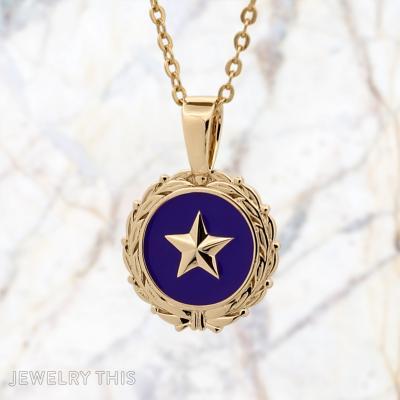
This pendant began as the star motif from an existing ring, rebuilt as a stand-alone ...

A cherished token of legacy and family pride, this silver pendant was meticulously crafted for ...

The Gold plated Silver pendant features a beautifully detailed elephant walking with its trunk lifted ...
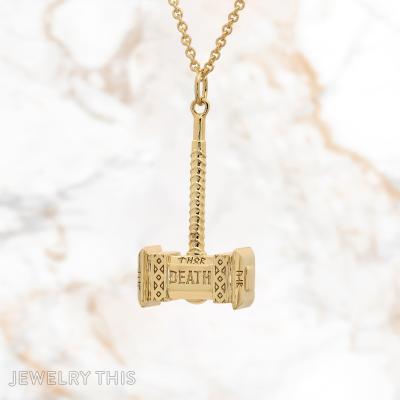
A bold, sculptural statement piece inspired by the legendary hammer of Thor, crafted with full ...


This heartfelt pendant features a 1-inch silver heart with a charming buffalo dangling at its ...

To celebrate his wife’s birthday, a husband crafted a unique pendant based on a drawing ...

This dainty 14k yellow gold mini star pendant is captivating with its intricate details. The ...

This stunning pendant is a radiant tribute to luck and personal significance. Crafted in 14kt ...

This lariat-style pendant pairs an open heart with a smaller pineapple charm that hangs through ...



