

GIGI Heart Pendant — Pavé Silver Nameplate Necklace
$$
Sterling silver, moissanite
M. wanted a surprise gift for someone close to him, with a name that mattered permanently set into the piece. He chose a puffed heart pendant with pave stones and asked for the name to stand out, so the letters were given a blackened finish against the bright stone setting. When he gave it to her, he wrote that the moment she learned it was custom made, she was even more moved.
'I love it Carrie, just what I wanted.' — on seeing the first render
'It's beautiful and Terrie is very happy. Thanks to you Carrie for making such a special event for us!' — on delivery
Quick specs
Design type
Primary Metal
Shape / Cut
Primary Stone
Accent Stones
Design Complexity
Intent: Certainty
Size
Pendant approximately 1.25-1.5in wide; chain 30in rope style, sterling silver.
How they made it distinctive
-
01
Hollow, domed heart construction chosen specifically to give the piece visual depth and dimension without making it too heavy to wear
-
02
Name engraved across a smooth center band rather than on the surface, creating a clear visual break from the pave stones above and below
-
03
Blackened finish added to the lettering after the first render, specifically requested so the name would stand out clearly against the bright stones
-
04
Moissanite chosen over diamond to allow a higher total carat look across the pave surface within budget
-
05
Cast in three separate silver sections and assembled afterward, a construction method that makes the dimensional puffed shape achievable
How you'd make it yours
Stone: this piece uses moissanite; a new commission could use lab diamonds, natural diamonds, or cubic zirconia depending on budget and brilliance preference
Metal: this piece is sterling silver; the same pave heart design works in gold-plated silver or solid gold
Engraving: the center band can carry a different name, word, or short phrase on a new piece
Size: made to this piece's 1.25-1.5 inch specification; a new piece can be scaled larger or smaller
Finish: the blackened lettering treatment is optional and the band could instead be left in a natural polished finish
One of a kind: this exact pendant was designed for one client's gift and is not reproduced — a new commission is an original piece inspired by this one, not a copy
Design changes made
The stone setting moved from diamonds to moissanite to balance budget and carat weight, and the engraved name was given a blackened finish — a request made after seeing the first render — so the lettering would stand out clearly against the pave stones.
Who this is for
This piece is for someone who wants a gift to carry a specific name close to the heart, literally and visually, rather than a generic heart pendant off a shelf. It's especially fitting for a surprise gift moment where the recipient's reaction to the custom detail is part of the point.
How it's made
The approved design was built as a 3D CAD model, then 3D-printed in resin and shared with the client as a preview of the piece's shape before any metal was cast. The resin model was attached to a wax tree, invested in plaster, and fired in a kiln to burn out the pattern, leaving a hollow mold. Molten sterling silver was then cast into the mold in three separate sections, which were later assembled into the finished pendant.
After casting, the three cast sections were cleaned, polished, and joined into the finished heart shape. The pave-set areas were finished first to secure the small round moissanite stones evenly across the top and bottom curves, and the center name band was polished to a mirror finish before the lettering was treated with a blackening agent so the engraving would read clearly against the bright stones.
Key note
The pendant is cast in three separate silver sections that are assembled after casting, which is why the hollow heart achieves a domed, dimensional shape without becoming too heavy to wear.
Pricing guidance
A sterling silver pave heart pendant of this size and stone coverage sits in the mid range for custom pendant work. Most of the cost comes from the volume of small stones set by hand across the pendant's curved surface, not from the metal itself. Moving to diamonds instead of moissanite, or increasing total carat weight, shifts the price substantially higher from there.
Moves price up ↑
- ↑ Upgrading from moissanite to natural mined diamonds at the same carat weight
- ↑ Increasing the pendant size beyond 1.5 inches, which raises both metal and stone count
- ↑ Choosing a solid (non-hollow) construction, which adds significant metal weight
- ↑ Adding pave stones to the center name band instead of leaving it polished smooth
- ↑ Selecting a gold metal rather than sterling silver
Moves price down ↓
- ↓ Reducing the total carat weight of pave stones
- ↓ Choosing cubic zirconia instead of moissanite for a lower material cost
- ↓ Scaling the pendant down closer to 1 inch
- ↓ Leaving the engraved lettering in its natural polished finish rather than adding a blackening treatment
- ↓ Selecting a shorter, simpler chain style instead of a rope chain
Questions people ask
Yes, moissanite is a popular diamond alternative because it has similar brilliance and a hardness rating of 9.25 on the Mohs scale, just below a diamond's 10. For a pendant with a large number of small pave-set stones, moissanite allows a higher total carat look at a more moderate cost than natural or lab diamonds. It holds up well to daily wear and resists scratching in normal use. The main visual difference from diamond is a slightly different refraction of light, which most people don't notice without close side-by-side comparison.
A blackening treatment on engraved lettering is a surface application, similar to oxidizing, and it can fade gradually with friction against skin and clothing over years of wear. Sterling silver itself also naturally oxidizes and darkens over time, which actually helps engraved recesses stay visually distinct even as the surrounding polish is maintained. If the blackening does fade, it can typically be reapplied by a local jeweler. The bright pave stones around the lettering are unaffected by this and will not change in appearance.
A heart pendant in the 1.25 to 1.5 inch range with pave coverage on the top and bottom curves typically holds several dozen small round stones, often totaling 3 to 4 carats combined. The stone count depends on the stone size chosen and how much surface area is covered. This piece specifically carries approximately 3.8 total carats across its pave-set surface. Each stone is individually prong-set by hand, which is why pave work takes longer to produce than a single center-stone setting.
A sterling silver pave heart pendant with an engraved name sits in the mid range for custom pendant work, largely due to the labor of hand-setting dozens of small stones. Choosing moissanite over diamonds keeps the cost more moderate while still achieving a bright, high-coverage pave look. Price increases substantially if natural diamonds are chosen at the same carat weight. Chain material and length typically do not add significantly to the overall cost when sterling silver is used throughout.
The design phase for a custom pendant typically takes about one week, covering the sketch, 3D CAD model, and photorealistic render for approval. Once the design is approved, production takes approximately four to five weeks, covering wax/resin modeling, casting, stone setting, and finishing. A resin preview is often shared partway through so the client can see the piece's shape before it's cast in metal. Total time from deposit to delivery is typically five to six weeks on a standard timeline.
Yes, though a hollow construction is often recommended for larger pendants in the 1.25 to 1.5 inch range to keep the piece comfortable to wear. A hollow or puffed heart achieves a domed, dimensional look without the excess weight a solid casting of the same size would carry. Solid construction is possible but will increase both the metal cost and the finished weight significantly. Most clients who want a bold-looking pendant that still feels light choose the hollow approach.
Yes, a chain can typically be swapped for a different length after the fact, since the chain is a separate component from the pendant itself. This usually involves returning the original chain so a new length can be sourced and shipped out. Because the chain is a standard sourced item rather than part of the custom pendant design, exchanging it does not affect the pendant's design or stone setting. It's worth confirming chain length preferences as closely as possible upfront to avoid this extra step.
A rope chain has a twisted, spiral-link design that catches light along its length and pairs well with a dimensional pendant like a pave heart. It tends to read as slightly more substantial than a simple cable chain while remaining lightweight and flexible. Other common styles include curb and figaro chains, which have flatter, more geometric links. The choice is largely aesthetic preference, since all of these styles are available in matching metal to the pendant.
Explore Similar Creations
Every masterpiece starts with a spark. Explore how our clients raw ideas - sketches, heirlooms, inspirations - were transformed into bespoke works of arts.
This striking custom logo pendant beautifully represents Cyborg Fitness. It’s crafted from durable sterling silver ...

This custom logo pendant is crafted with a highly polished sterling silver background and features ...

This elegant custom pendant is crafted from 14k yellow gold and features a vertical orientation. ...

This dimensional 2 inch silver pendant is captivating in detail. A male lion wearing a ...

This custom made dragon pendant is testament to the bond shared by the client and ...
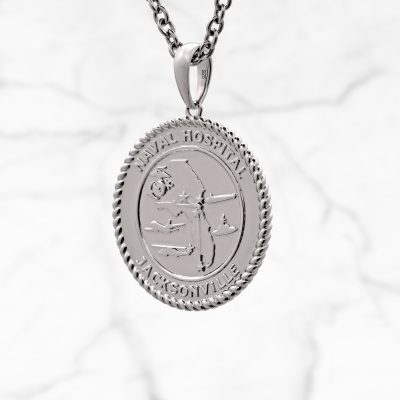
Measuring one inch in size, this sterling silver pendant showcases a captivating dimensional design featuring ...

This exquisite custom pendant is a celebration of the bond between a parent and their ...

This exquisite multicolored pendant is a masterpiece of elegance. Crafted in yellow gold, the circular ...

Embrace the whimsical beauty of this charming custom pendant. Crafted from sterling silver, the pendant ...

This striking logo pendant is crafted in sterling silver with meticulous cut-out detailing. Measuring 1.25 ...

This unique white gold pendant features a simple yet intriguing shape. While some may find ...

This exquisite 14k yellow gold pendant is a true expression of faith and devotion. The ...



