
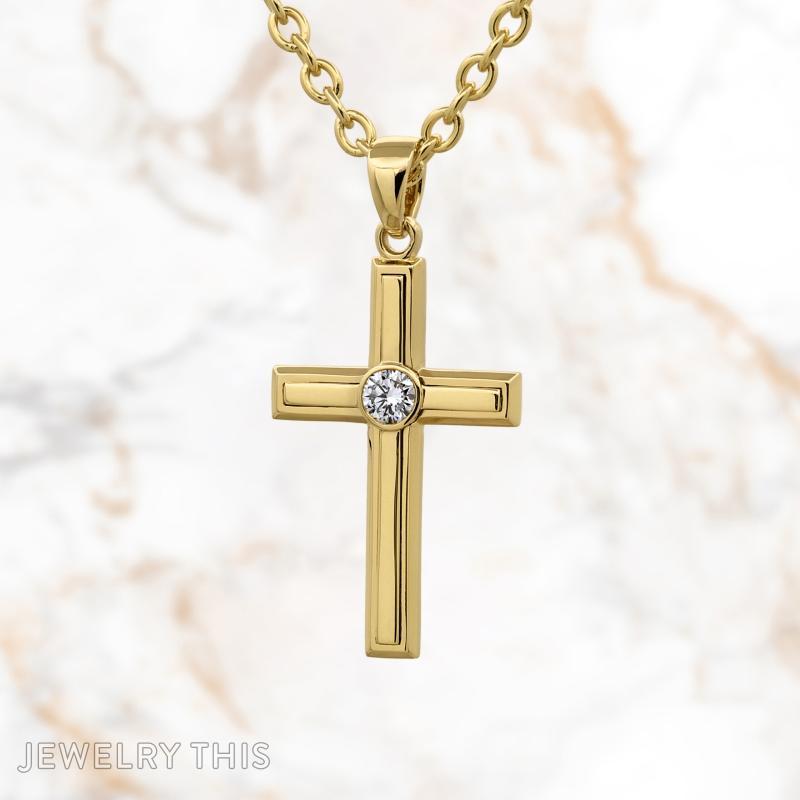
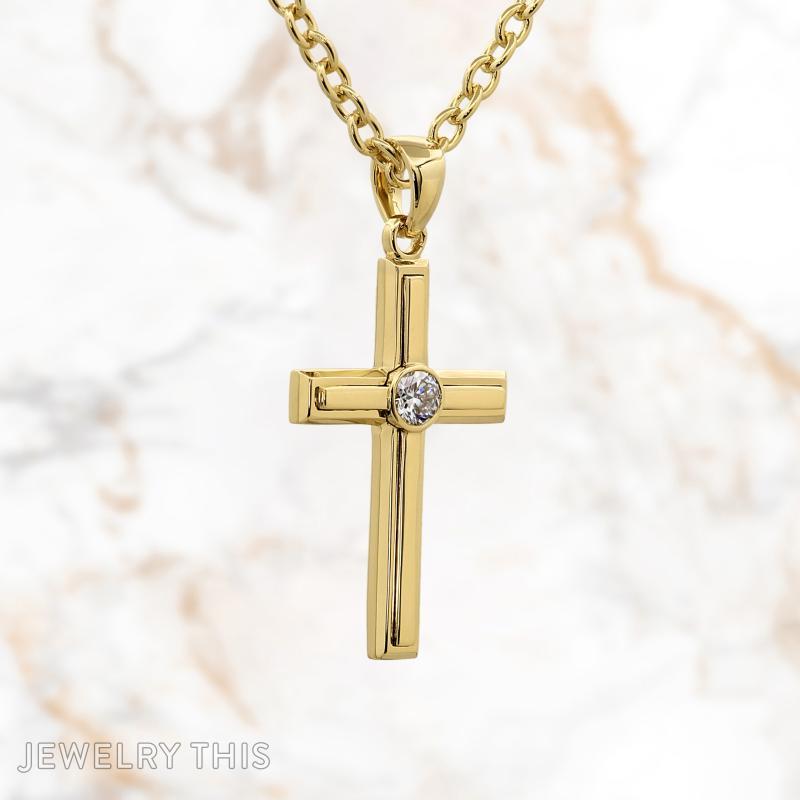
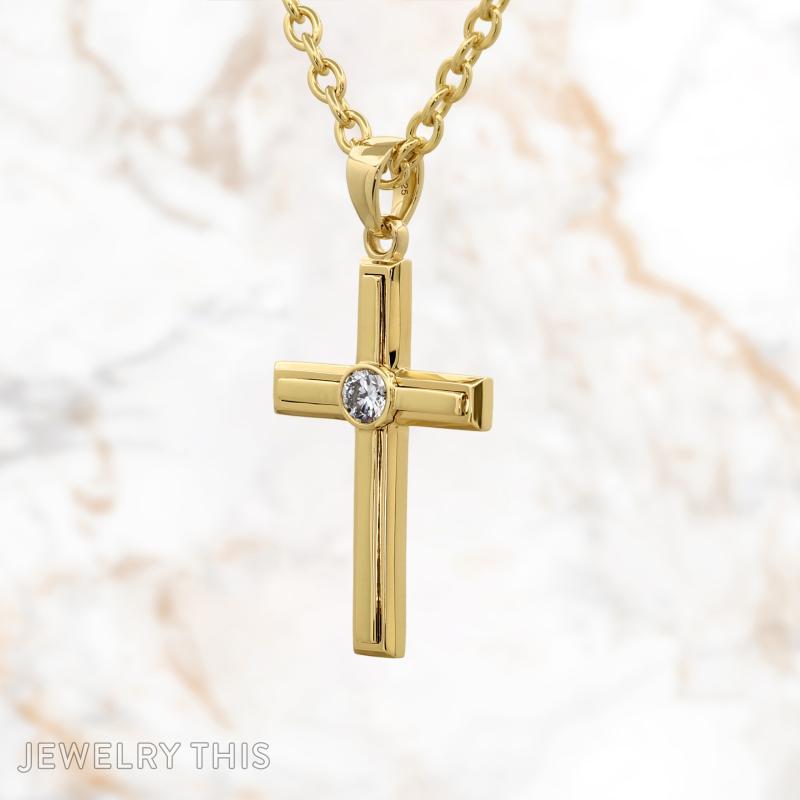
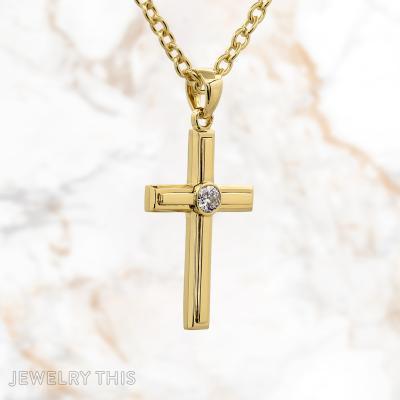
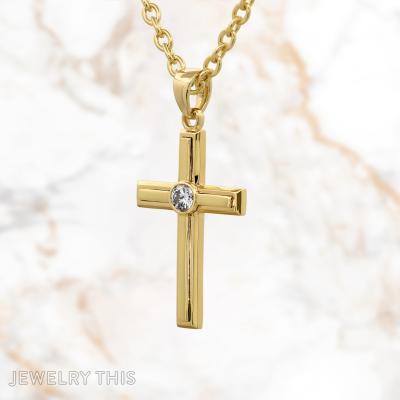
Bezel-Set Cross Pendant in 14k Yellow Gold
$
Gold-plated silver, 14k yellow gold plating, lab diamond
A client wanted to turn a pair of earrings that held meaning for his wife into a wearable cross pendant. After weighing moissanite against lab diamond for durability and upkeep, he chose to replace the original stone with a new lab diamond set at the center of the cross. He approved the design right away, writing: 'This looks beautiful, I think we can proceed.'
'This looks beautiful, I think we can proceed.' — on seeing the first render
Quick specs
Design type
Primary Metal
Shape / Cut
Primary Stone
Accent Stones
Design Complexity
Intent: Certainty
Size
Pendant approximately 1in (25.4mm) length. Chain 1.5mm width x 18in, cable style.
How they made it distinctive
-
01
Single bezel-set lab diamond chosen over the original moissanite for improved durability and lower long-term maintenance
-
02
Design started from a pair of earrings that held meaning for the client's wife, translated into a wearable cross
-
03
Grooved center line down each arm adds dimension without adding stones or complexity
-
04
Bezel setting selected specifically so nothing on the stone catches on clothing or hair during daily wear
-
05
Kept to a single center stone rather than a multi-stone layout to keep the metal, not the gems, as the visual focus
How you'd make it yours
Stone: this piece uses a lab diamond; a new commission could use a natural diamond, moissanite, or a colored gemstone
Metal: this piece is 14k yellow gold plated silver; the same design works in solid 14k or 18k gold, white gold, or rose gold
Stone placement: this piece has one center stone; a new commission could add stones at the tips of the arms instead
Chain: this piece uses an 18-inch 1.5mm cable chain; a new commission could use a different length or chain style
One of a kind: this exact pendant was designed for one client and is not reproduced — a new commission is an original piece inspired by this one, not a copy
Design changes made
The client initially considered incorporating the original moissanite stone from the earrings, then decided on a new lab diamond after discussing durability, maintenance, and cost — landing on a single center stone rather than the multi-stone corner layout also considered.
Who this is for
This piece is for someone who wants a cross pendant that stays simple and wearable day to day, but carries a personal reason behind the stone at its center. It's especially right if you're looking to honor something meaningful — a piece of jewelry, a memory, a relationship — without needing the design itself to be elaborate.
How it's made
Once the design was approved, a wax model was 3D printed and attached to a wax tree, which was invested in plaster and fired in a kiln to burn out the wax and leave a hollow mold. Molten 14k yellow gold was cast over a sterling silver base, then cooled and released from the mold to produce the raw pendant.
After casting, the pendant was cleaned and polished to a bright finish, with the center groove line on each arm burnished to stay crisp against the surrounding polish. The lab diamond was then bezel-set into the crossbar intersection, with the continuous metal rim securing the stone without prongs that could catch on clothing or hair. The matching cable chain was finished separately and attached through the bail.
Key note
The bezel setting was chosen specifically so the single center stone sits flush and protected within the metal rim, rather than raised on prongs.
Pricing guidance
A simple gold-plated cross pendant with a single bezel-set lab diamond sits toward the lower end for custom pendant work. Most of the cost comes from the plated gold body, the chain, and the diamond itself rather than labor, since the design is intentionally uncomplicated. Moving to solid gold or a larger stone are the two factors that shift this category's pricing the most.
Moves price up ↑
- ↑ Upgrading from gold-plated silver to solid 14k or 18k gold
- ↑ Choosing a natural diamond graded GH SI over a lab-grown diamond
- ↑ Adding gemstones at the ends of the cross arms in addition to the center stone
- ↑ Increasing the center stone size beyond a small accent diamond
- ↑ Selecting a thicker or more elaborate chain style
Moves price down ↓
- ↓ Keeping the pendant on the smaller end, around 1 inch
- ↓ Choosing a lab diamond instead of a natural diamond
- ↓ Using a thinner, simpler cable chain
- ↓ Sticking with a single center stone rather than multiple accents
- ↓ Selecting gold-plated silver rather than solid gold
Questions people ask
Lab diamonds and moissanite are both durable, but they are chemically different stones — a lab diamond is structurally identical to a natural diamond, while moissanite is a separate mineral with a slightly different sparkle and higher fire (more rainbow flash). Lab diamonds have become more affordable in recent years and are generally considered the more durable and higher-status option between the two. To the naked eye at small sizes, like an accent stone in a cross pendant, both look bright and clear. Many people upgrade from moissanite to lab diamond specifically for the added durability and prestige at a similar price point.
Gold-plated silver is a sterling silver base with a layer of gold plating over it, and the plating will gradually wear thinner with regular contact, especially at points that rub against skin or clothing. It typically holds up well for one to two years of daily wear before any fading becomes noticeable, and replating is a straightforward service most jewelers offer. Solid gold does not have this issue since the color goes all the way through the metal. For a pendant that will be worn often over many years, solid gold is the more maintenance-free option, though gold-plated silver is a lower-cost way to get the same look.
For a design like this, the process typically runs about one week for the initial 3D design and render, followed by three to four weeks for production once the design is approved and paid for. Production includes 3D printing a wax model, casting the metal, polishing, and setting the stone. The total timeline from deposit to delivery is usually around five to six weeks for a standard order. Rush timelines are available if needed but were not used for this piece.
Yes, that's a common alternative layout — stones can be set at the tips of the cross arms in addition to or instead of a center stone. This typically costs more since it requires more stones and more individual settings, and it changes the visual balance of the piece toward the stones rather than the metal. Some designs use small accent stones at the ends paired with a slightly larger center stone for a layered look. The right choice usually comes down to how much of the metal you want visible versus how much sparkle you want.
A cross pendant like this — around one inch long, gold-plated silver body, single bezel-set lab diamond, and a matching cable chain — falls toward the lower end of custom pendant pricing. The chain and stone are typically priced as separate line items from the pendant body itself. Choosing solid gold instead of plated silver, or a natural diamond instead of lab-grown, are the two biggest factors that increase the cost from there. The design's simplicity keeps labor costs low compared to more elaborate pendant styles.
Sometimes, depending on the stone's size, cut, and condition — but it requires the physical stone to be sent in and inspected before a design can be finalized around it, since specifications can't be confirmed from a photo alone. In some cases, a client decides it's simpler or more cost-effective to use a new stone of similar size and type instead, especially if durability or budget is a consideration. This was the case here: the original moissanite from a pair of earrings was considered, but the client ultimately chose a new lab diamond instead. Either path is workable, but the physical-stone route takes more coordination and time.
A bezel setting surrounds the stone with a continuous rim of metal instead of holding it with metal prongs, which means there's nothing raised or pointed that could catch on clothing, hair, or skin. It also protects the edges of the stone from chips or impact since the metal wraps around the girdle. For a pendant worn close to the body and clothing every day, this makes it a practical, low-maintenance choice. The trade-off is that a bezel shows slightly less of the stone's profile from the side compared to a prong setting.
Yes, a cross pendant with this same grooved-arm design and bezel-set center stone translates well into white gold or rose gold — the design itself isn't tied to a specific metal color. White gold would give a cooler, more neutral tone, while rose gold would warm up the overall look. The stone setting and chain style would remain the same regardless of metal choice. Solid versions of any of these metals would cost more than the gold-plated silver option used here.
Explore Similar Creations
Every masterpiece starts with a spark. Explore how our clients raw ideas - sketches, heirlooms, inspirations - were transformed into bespoke works of arts.

This breathtaking custom pendant features a stylized horse head design with a flowing mane, crafted ...

This custom-made pendant celebrates freedom with a unique two-toned design. The letter ‘V’ is crafted ...

This yin and yang design pendant was crafted in sterling silver. Based on images of ...

This elegant yellow gold medallion-style pendant is circular in shape with a nugget-like patterned border, ...

This sterling silver custom pendant was designed to combine the client’s passions for fishing and ...

A wife’s deep love for her husband are beautifully captured in this double R pendant. ...

This pendant was inspired by a daughter’s years of ballroom dancing and a celebration of ...

This sterling silver sea turtle pendant beautifully symbolizes family and connection. The turtle’s shell features ...

This unique white gold pendant features a simple yet intriguing shape. While some may find ...

An anatomical heart pendant crafted in yellow and rose gold plated sterling silver with sandblasting ...

This beautiful custom pendant celebrates the love of beloved family pet, Lucy the beagle. Crafted ...



