3 Common Misconceptions About Jewelry Pricing (and What Actually Drives Value)
When people hear the price of a custom jewelry piece especially in gold, platinum, or diamond settings, it’s common to assume the cost should be simple and predictable. These jewelry pricing misconceptions often lead to confusion about what actually drives value.
Many expect jewelry pricing to be based mainly on metal weight, plus a standard markup. Others assume diamonds are always a stable investment or that heavier jewelry automatically means better quality.
In reality, fine jewelry pricing is far more nuanced. It reflects not only materials, but also craftsmanship, design development, precision, and long-term durability.
Below are three of the most common jewelry pricing misconceptions, along with what actually determines real value in custom-made pieces.
Jewelry Pricing Misconception #1: Diamond Prices Always Increase Over Time
Many people assume diamonds are a safe investment that steadily increases in value. This belief is understandable – but not accurate.
Diamond pricing is influenced by a wide range of changing market forces.
How diamond pricing actually works
| Belief | Reality |
|---|---|
| Diamonds always increase in value | Prices fluctuate based on market demand |
| Diamonds are stable investments | Not reliable as financial assets |
| All diamonds are priced the same way | Cut, clarity, shape, and certification matter |
| Natural diamonds always outperform | Lab-grown diamonds have changed pricing dynamics |
What affects diamond value
Diamond prices are shaped by:
- Global supply and demand
- Mining production levels
- Consumer trends and preferences
- Growth of lab-grown diamonds
- Certification standards and grading systems
Natural vs lab-grown diamonds
The rise of lab-grown diamonds has significantly influenced pricing structures across the industry, making diamonds more accessible while also reshaping how value is perceived.
Key takeaway
Diamonds should be viewed less as financial investments and more as meaningful, long-lasting materials chosen for beauty and symbolism.
Jewelry Pricing Misconception #2: Heavier Jewelry Always Means Better Value
At first glance, it seems logical that more gold equals more value. However, in custom jewelry, weight is not a reliable measure of quality.
Weight vs real value
| Heavier Jewelry | Better Jewelry (Reality) |
|---|---|
| More gold = better quality | Smart engineering matters more |
| Heavier = more expensive always | Design efficiency affects cost |
| Bulk = durability | Structure and setting matter more |
| Weight is key value indicator | Craftsmanship + wearability matter more |
Why weight can be misleading
A heavier piece may simply mean:
- Excess metal used without design efficiency
- Less refined engineering
- Bulkier construction that doesn’t improve durability
Meanwhile, a well-designed lighter piece can offer:
- Strong structural integrity
- Better balance and comfort
- Improved long-term wearability
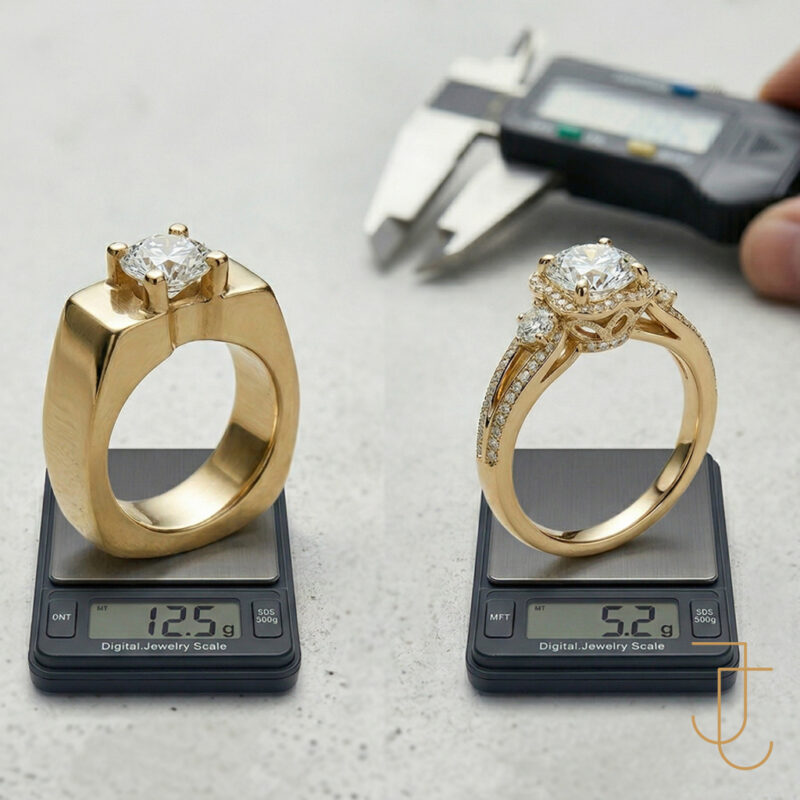
Metal Weight Comparison in Design
Jewelry Pricing Misconception #3: Jewelry Is Just the Metal Price Plus a Markup
This is the most common misunderstanding and one of the most important to clarify.
Many people believe a gold ring or pendant is priced like this:
gold weight × gold market price + a fixed markup
While gold is part of the cost, it represents only a fraction of the full value of a custom piece.
What actually goes into custom jewelry pricing
| Factor | Common Assumption | Reality in Custom Jewelry |
|---|---|---|
| Gold | Main cost driver | Only one component of total cost |
| Pricing model | Metal + markup | Design + labor + stones + finishing + QC |
| Craftsmanship | Not considered | Major driver of value |
| Time | Instant production | Hours or days of skilled work |
| Value perception | Material-based | Craftsmanship and design-based |
| Aftercare & support | Not included in pricing | Long-term care such as resizing, maintenance, repairs, and warranty support is part of the overall value |
The real components behind a custom piece
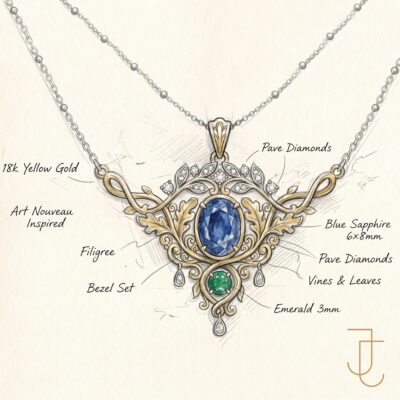
- Design & Development: Every piece begins with a creative and technical process, including consultations, sketches, CAD modeling, and structural engineering to ensure the design is both beautiful and wearable.
- Craftsmanship & Labor: Jewelry is built through skilled work such as casting, soldering, polishing, and finishing. Each step requires precision and experience.
- Stone Selection & Setting: If diamonds or gemstones are involved, value is influenced by sourcing quality stones, matching them properly, and setting them securely for long-term wear.
- Quality Control: Each piece must be inspected, adjusted, and refined to ensure durability, comfort, and finish quality.
- Aftercare & Long-Term Support: High-end custom jewelry also includes ongoing care that helps preserve the piece over time. This can include resizing, prong tightening, stone checks, professional cleaning, repairs or refinishing, warranty coverage, and ongoing guidance on proper care. This long-term support helps ensure the jewelry stays secure, wearable, and beautiful for years to come.
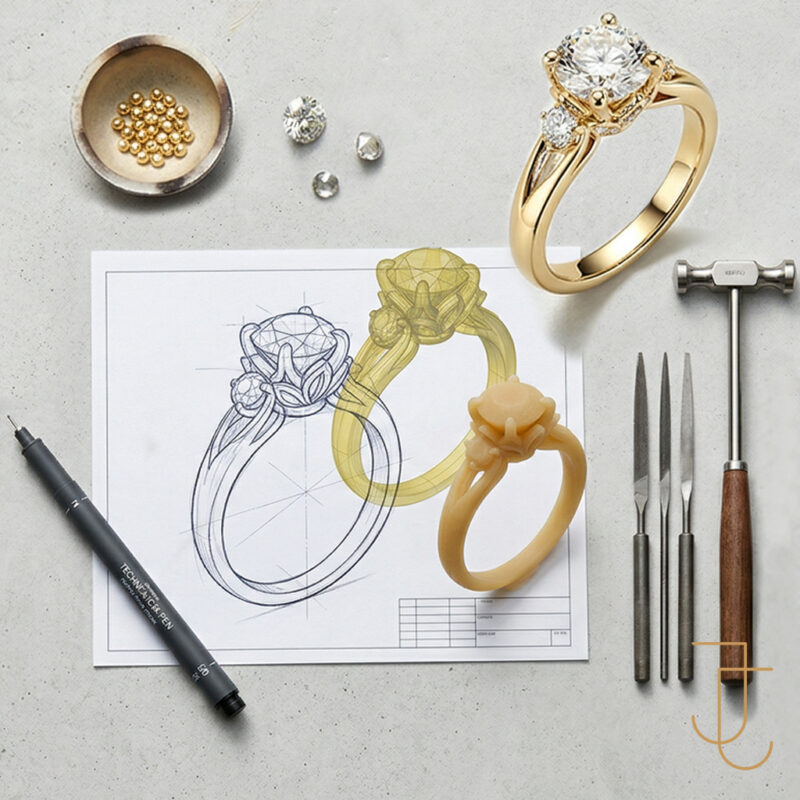
Custom Jewelry Design Process
Why this matters
Reducing jewelry to metal value alone ignores the most important part of the process: the transformation of raw materials into a finished, wearable piece of craftsmanship.
What actually defines value
In fine jewelry, true value is better measured by:
Design intelligence – how well the piece is engineered for beauty and function
Craftsmanship quality – finishing, symmetry, and precision
Stone security – durability of settings
Wearability – comfort in daily use
Why These Misconceptions Matter in Gold Price Conversations
When discussions focus only on gold price fluctuations, it’s easy to reduce jewelry to a commodity.
However, as this breakdown shows:
- Gold is only one component of value
- Diamonds and gemstones are not simple investment assets
- Craftsmanship and design often represent a significant portion of the final price
- Aftercare and long-term support also contribute to the overall lifetime value of the piece
Understanding this creates a clearer and more realistic expectation of how custom jewelry is built and priced.
Final Thoughts
Custom jewelry is not priced like raw material—it is created like a carefully engineered, wearable piece of art.
Each piece reflects:
- Design expertise
- Skilled craftsmanship
- Technical precision
- Material selection
- Emotional significance
- Long-term care and support over the lifetime of the piece
When all these elements come together, pricing focuses less on metal weight and more on the full value of what the piece represents.
If you’re ready to turn an idea into something meaningful, you can create custom jewelry designed around your story, style, and materials that matter most to you.
Frequently Asked Questions About Jewelry Pricing
What determines the price of custom jewelry?
Design, craftsmanship, gemstones, labor, and long-term aftercare—not just metal.
Is gold the main cost in jewelry?
No. Gold is only one part; most value comes from design, craftsmanship, and ongoing support.
Why is custom jewelry more expensive?
Skilled artisans create it from scratch through a personalized process, and it also includes long-term care such as resizing and ongoing support.
Are diamonds a good investment?
Not typically. Prices fluctuate and do not guarantee increases.
Does heavier jewelry mean better quality?
No. Smart design, durability, and wearability matter more than weight.
Why do similar rings have different prices?
Differences in craftsmanship, stone quality, finishing, and aftercare services.
Is custom jewelry worth it?
For many, yes – it offers better quality, personalization, and long-term support over the years.