How CAD Technology Helps Create the Perfect Custom Engagement Ring
Designing a custom engagement ring is about more than choosing a beautiful gemstone or precious metal. It is about bringing a personal vision to life in a piece of jewelry that reflects your style, holds meaning, and is made to be treasured for years to come.
But how do you turn an idea, a sketch, or a collection of inspiration images into a finished ring? That is where CAD technology in jewelry design makes a difference.
Computer-Aided Design (CAD) allows jewelers to create detailed digital models of custom rings before they enter production. This technology helps customers visualize their designs, explore different details, and make informed decisions before their jewelry is crafted.
At JewelryThis, custom jewelry is about combining individual creativity with thoughtful design and skilled craftsmanship. CAD is an important part of that journey, helping bridge the gap between imagination and the finished piece.
In this guide, we explore how CAD ring design works, what it offers customers, and why it plays such a valuable role in creating a custom engagement ring, wedding band, or meaningful piece of fine jewelry.
What Is CAD in Jewelry Design?
CAD stands for Computer-Aided Design. In jewelry making, it refers to specialized software used to create precise three-dimensional digital models of rings and other jewelry pieces. Instead of relying exclusively on hand-drawn sketches or physical prototypes, a jeweler can use CAD software to develop a detailed representation of a proposed design.
The model can show important features such as:
- The overall shape and proportions of the ring.
- The width, thickness, and profile of the band.
- The size and placement of the center gemstone.
- The arrangement of accent diamonds or colored gemstones.
- The shape and structure of the setting.
- Decorative details, engraving areas, and design elements.
These digital models can be viewed from multiple angles, making it easier to understand how the different elements work together. In simple terms, CAD helps you see and refine your ring design before it becomes a physical piece of jewelry. This is particularly valuable when creating a custom ring, where small details can make a meaningful difference to the final appearance.
How Does CAD Technology Help Create the Perfect Custom Engagement Ring?
CAD technology supports several important stages of the custom jewelry design process. From exploring the initial concept to refining technical details, it helps customers and jewelers work toward a shared vision.
1. It Turns Your Ideas Into a Visual Design
Many people begin the custom ring journey with an idea rather than a complete design. You might have saved photographs of engagement rings you love, imagined a particular gemstone combination, or inherited a ring whose setting you would like to reinterpret. You may know exactly how you want the ring to feel without knowing the technical details required to create it.
CAD helps translate these ideas into a more developed visual concept. A jeweler can use your preferences to create a digital model that incorporates your chosen ring shape, gemstone arrangement, metal, and decorative details.
For example, you might want an oval center diamond in a yellow gold setting with delicate accent stones along the band. A CAD model can bring these elements together so you can evaluate the overall design before production begins.
This makes the process more collaborative. Rather than trying to imagine every detail from a verbal description, you can review a visual representation and discuss what feels right.
2. It Helps You Visualize Your Engagement Ring From Different Angles
A ring can look very different depending on the angle from which you view it. A top-down image may highlight the gemstone and its surrounding details, while a side view reveals the setting height, gallery structure, and relationship between the center stone and the band.
With 3D jewelry modeling, the design can be examined from multiple perspectives.
This allows you to consider questions such as:
- How prominent will the center gemstone look?
- Does the band have the proportions I imagined?
- How does the setting look from the side?
- Are the decorative details balanced?
- Does the overall design feel delicate, bold, classic, or contemporary?
These views are particularly helpful when designing a distinctive engagement ring or a wedding band that needs to complement an existing ring. Digital renderings can also help illustrate how different finishes or metal colors may affect the overall appearance. However, screen images are representations, and the appearance of actual metals and gemstones can vary with lighting, material properties, and viewing conditions.
3. It Makes Design Refinements Easier
One of the most useful advantages of CAD ring design is the ability to refine a concept before physical production. Perhaps you love the overall shape of your ring but would prefer a slightly wider band. Maybe the gemstone should sit lower, or you want to simplify the setting to create a more understated appearance.
A digital model provides a practical starting point for discussing these changes. Depending on the design and the stage of production, the model can be adjusted to explore alternative proportions, settings, stone arrangements, or decorative features.
This helps customers make decisions with greater clarity and gives the jeweler an opportunity to assess the technical implications of proposed changes.It is important to remember that not every modification is equally straightforward. Changes involving gemstone placement, structural support, or intricate details may require additional design work.
The benefit of CAD is not that every idea can be implemented without limitations. Rather, it gives the customer and jeweler a clearer way to evaluate possibilities before committing to manufacturing.
4. It Supports Precision in Ring Proportions and Stone Placement
A beautiful ring needs more than an attractive appearance. Its proportions and construction must also be considered carefully. The width and thickness of a band, the dimensions of a setting, and the positioning of individual gemstones all influence the final result. CAD software allows these features to be modeled with specific measurements. This can help the jeweler assess how the components fit together and identify potential design concerns before production.
For example, a halo engagement ring requires careful coordination between the center stone, surrounding diamonds, and supporting structure. A ring featuring multiple gemstones also needs appropriate spacing and setting details. A digital model helps communicate these relationships and supports the development of manufacturing specifications.
Precision in CAD contributes to a well-planned design, but it does not replace skilled jewelry making. The final result still depends on appropriate materials, sound manufacturing techniques, careful stone setting, and quality control.
5. It Helps Evaluate Gemstone Settings and Engagement Ring Structure
The setting is one of the most important parts of a ring’s design. It affects how the gemstone is presented, how much light reaches it, and how well the stone is supported.
CAD can help model different setting styles, including:
- Prong settings: Individual metal prongs hold the gemstone in place.
- Bezel settings: A metal rim surrounds the gemstone’s perimeter.
- Halo settings: Smaller stones encircle a central gemstone.
- Pavé settings: Small gemstones are set closely together along a surface.
- Channel settings: Gemstones sit within a channel formed by the surrounding metal.
Each setting has different visual and practical considerations.
A low-profile setting may suit someone who prefers a more understated ring, while a more elevated design may create a prominent appearance for the center gemstone. A bezel setting may appeal to someone who likes a clean outline and additional perimeter protection.
A CAD model can help explore the appearance and structure of these options. The jeweler must still determine whether the design provides suitable support, appropriate clearances, and adequate metal around the stones.
This is especially important for rings intended for regular wear.
6. It Helps Create a Ring That Reflects Your Personal Style
Custom jewelry offers the opportunity to move beyond standard designs and create something that feels personal.
CAD makes it easier to combine individual preferences into a cohesive design.
You might want a vintage-inspired engagement ring with modern proportions, a minimalist wedding band with a subtle engraved detail, or a ring that incorporates a family gemstone into a contemporary setting.
A digital model can help bring these elements together while allowing the jeweler to assess how they interact.
It can also support the creation of coordinated wedding rings, where the engagement ring and wedding band need to complement each other in shape, height, finish, or decorative details.
The goal is not simply to produce a technically precise ring. It is to use technology in service of a design that reflects the person who will wear it.
CAD Ring Design vs. Traditional Jewelry Sketches
Traditional sketches and CAD models serve different but complementary purposes in the custom jewelry process.
| Feature | Traditional sketches | CAD ring design |
|---|---|---|
| Initial concepts | Excellent for exploring ideas quickly | Useful for developing a selected concept |
| Three-dimensional views | Usually limited to drawn perspectives | Allows the model to be viewed from multiple angles |
| Measurements | May show approximate dimensions | Can incorporate specified digital measurements |
| Design revisions | Depend on the drawing method | Digital geometry can often be adjusted efficiently |
| Technical planning | Communicates the overall concept | Helps communicate manufacturing details |
| Final appearance | Expresses the idea through illustration | Can produce detailed visual renderings |
Neither method has to replace the other.
A hand-drawn sketch can be an excellent starting point, particularly when the design is expressive or still evolving. CAD becomes especially useful when the concept needs to be developed into a detailed model for review and production.
The right approach depends on the design, the jeweler’s process, and the needs of the customer.
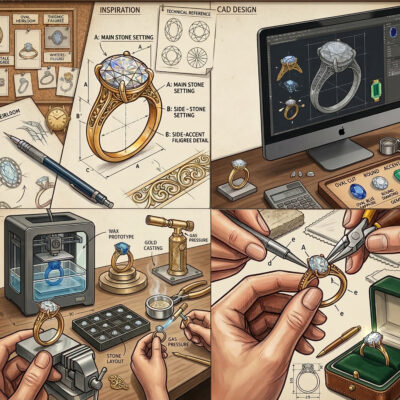
How the CAD Jewelry Design Process Works
Understanding the steps involved can make commissioning a custom ring feel much more straightforward.
Although every studio has its own workflow, the process commonly follows these stages.
Step 1: Discuss Your Vision and Requirements
The process begins with a conversation about the ring you want to create. This may include your preferred style, metal, gemstone, ring size, lifestyle, and any personal details you would like to incorporate.
Reference photographs, sketches, heirloom jewelry, and inspiration images can all help communicate your ideas. The jeweler uses this information to establish the design direction and identify any practical considerations that may influence the final piece.
Step 2: Develop the Initial Design Concept
The next stage involves translating your ideas into a proposed design. Depending on the project, this may begin with sketches, reference-based concepts, or an initial digital model.
At this point, the aim is to establish the main design elements, including the ring’s silhouette, gemstone arrangement, band proportions, and overall aesthetic. A clear concept helps ensure that the technical design develops around your priorities rather than losing sight of the original intention.
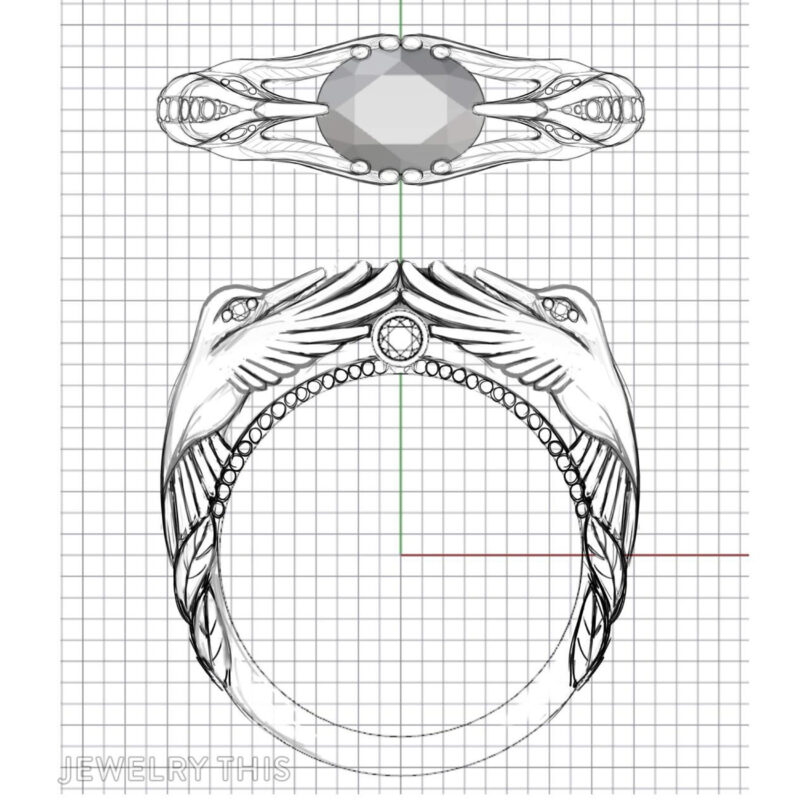
Concept Sketch by JewelryThis
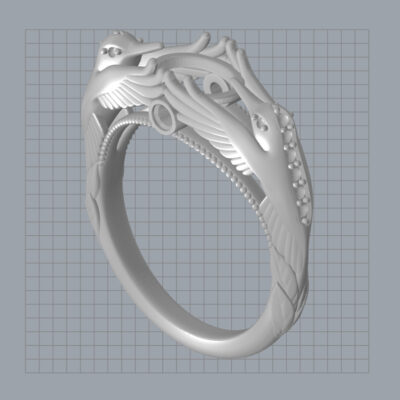
Step 3: Create the 3D CAD Model
Once the design direction has been established, the jeweler or CAD designer develops a three-dimensional model. The model includes the relevant dimensions and structural details required for the proposed ring. Gemstone sizes, setting positions, metal thicknesses, and other features are considered according to the design. This is where an idea begins to take on a more precise digital form.
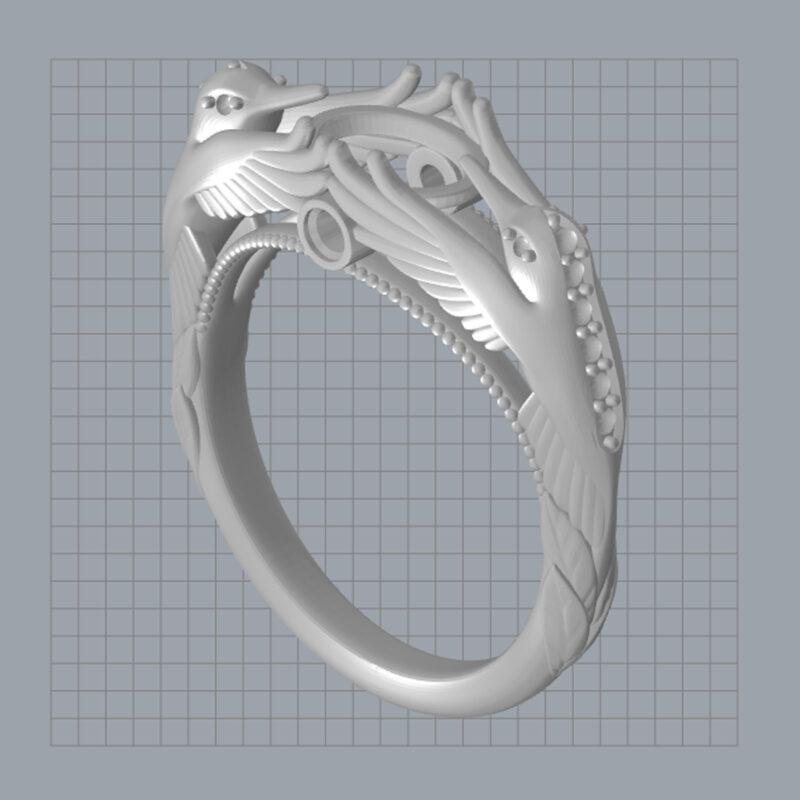
Step 4: Review the Design and Discuss Revisions
Before manufacturing proceeds, the digital model or its rendered views can be shared for review, depending on the studio’s process. This is an opportunity to check the proportions, setting style, and appearance of the design. You may decide to adjust a detail, reconsider the band profile, or explore a different gemstone arrangement.
It is worth clarifying which revisions are included in your custom design service and when final approval is required. More substantial changes may affect the production schedule. Taking time to review the design helps establish a shared understanding of what will be made.
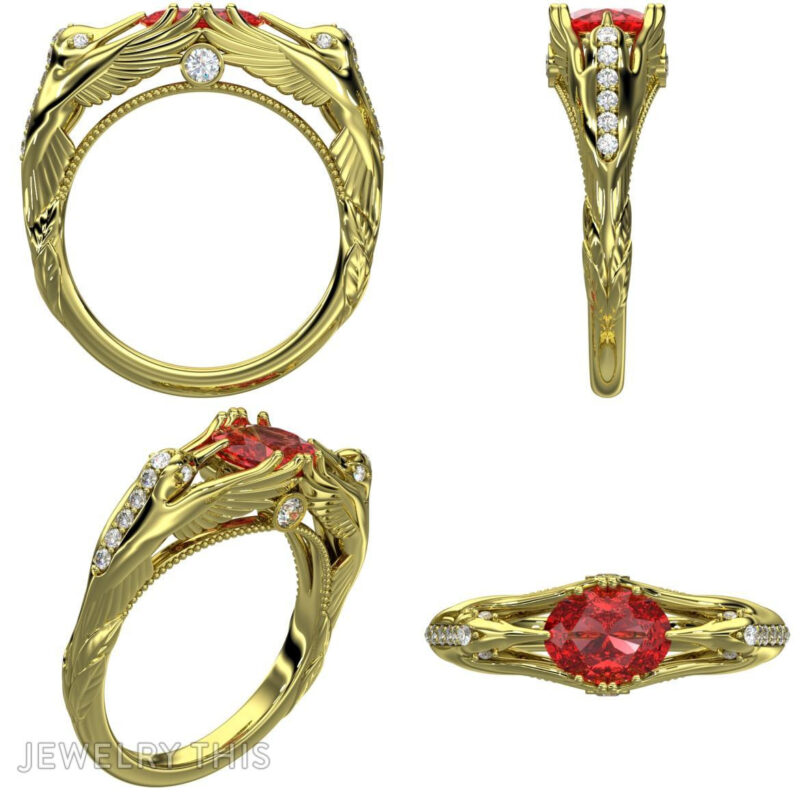
Photo-render of the Engagement Ring
Step 5: Prepare the Design for Manufacturing
Once the design has been approved, the digital model can be prepared for the appropriate manufacturing method. For many custom rings, this involves creating a physical pattern using a 3D printer or another suitable process. The pattern may then be used in investment casting, although manufacturing methods vary depending on the piece and the materials involved.
The metal ring is produced, refined, and prepared for the next stages. CAD is therefore one part of a broader process. It supports the translation of the design into a physical object, but the manufacturing steps remain essential.
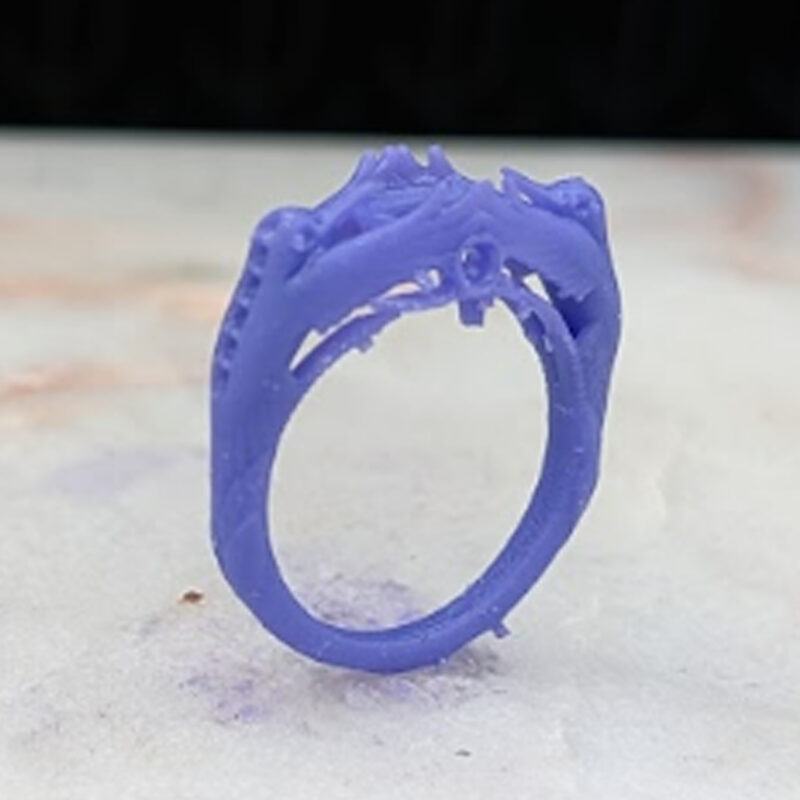
Step 6: Set the Gemstones and Finish the Ring
After the ring’s metal structure has been prepared, the gemstones can be set where the design requires them. The jeweler then completes the necessary finishing work, which may include polishing, refining the surface, checking the setting, and inspecting the overall construction.
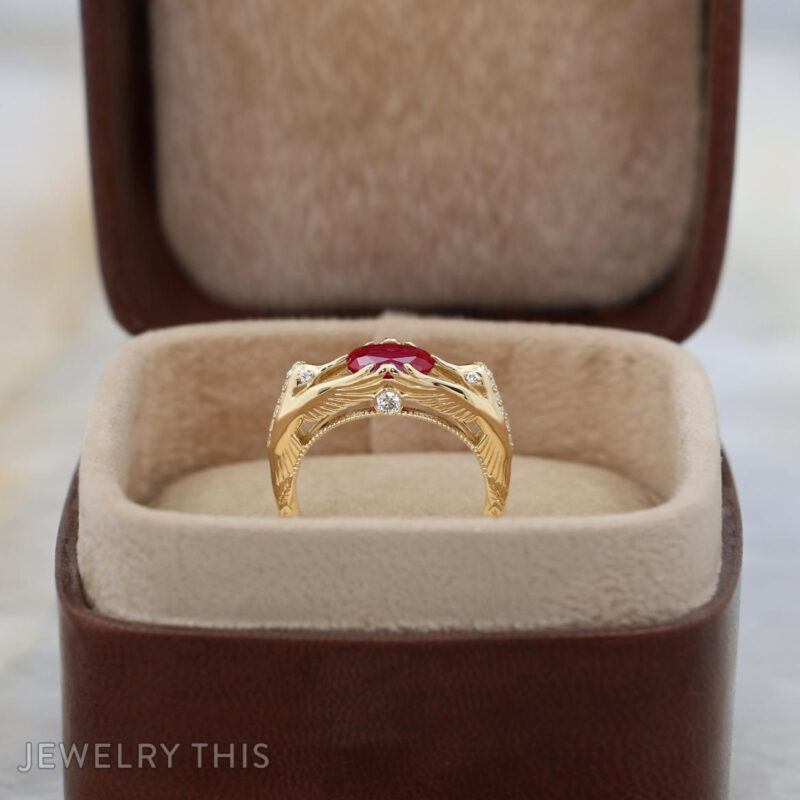
Finished humming bird Engagement ring
Quality control helps verify that the finished ring corresponds to the approved design and meets the appropriate standards for its intended use. The result is a physical piece that brings together digital planning, material knowledge, and hands-on craftsmanship.
Does CAD Technology Make Custom Rings More Accurate?
CAD can improve the precision of the design and help communicate measurements and manufacturing details. It also makes it easier to inspect proportions and identify potential problems before production. However, CAD alone cannot guarantee a perfect finished ring.
The accuracy of the final piece depends on several factors:
- The quality and completeness of the original digital model.
- The suitability of the design for the selected manufacturing method.
- The accuracy of casting, machining, or other production processes.
- The skill of the jeweler setting the gemstones and finishing the ring.
- The quality of the materials and the final inspection process.
A well-developed CAD model provides a strong foundation, but the finished ring still needs experienced hands and careful attention to detail. For customers commissioning fine jewelry, this distinction matters. Technology is most valuable when it supports craftsmanship rather than attempting to replace it.
Can You See Your Custom Ring Before It Is Made?
In many custom jewelry workflows, yes. CAD models and digital renderings can allow you to review the proposed design before physical production begins. The exact level of visualization depends on the studio’s process and the design stage.
A model may show the ring’s shape, proportions, gemstone placement, and setting structure. Rendered images may also illustrate different angles, metal colors, and surface finishes. These visuals can be useful when making decisions about a design that is difficult to imagine from a written description alone.
However, a digital rendering is not identical to the finished ring. Gemstone brilliance, metal reflections, color, and surface appearance may differ in real life. A rendering also cannot fully communicate the feel, weight, or comfort of a physical piece.
For this reason, CAD visualization should be treated as a decision-making tool rather than a guarantee that the final ring will look exactly like an image on a screen.
Is CAD Jewelry Design Suitable for Every Custom Ring?
CAD is particularly useful for rings with intricate settings, multiple gemstones, repeating details, or specific dimensional requirements. It can also be valuable for relatively simple designs when accurate proportions and clear manufacturing specifications are important.
Examples include:
- Custom engagement rings with distinctive center-stone settings.
- Wedding bands designed to fit alongside an existing engagement ring.
- Rings featuring halos, pavé details, or geometric patterns.
- Personalized rings that incorporate meaningful design elements.
- Heirloom redesigns that reinterpret an existing piece.
- Matching rings that share coordinated design features.
Some highly sculptural or traditionally crafted designs may benefit from a combination of hand fabrication, sketches, wax modeling, and digital techniques. The best method depends on the piece being created. A knowledgeable jeweler can recommend the approach that best supports the design’s appearance, structure, and intended use.
What Should You Ask Your Jeweler About CAD Ring Design?
If you are considering a custom engagement ring or wedding band, asking a few practical questions can help you understand the process and set clear expectations.
Consider asking:
- Will I be able to review the CAD model before production? Understand what views or renderings will be provided.
- Can I request changes to the design? Ask how revisions are handled and whether any limitations apply.
- How will the design be checked for structural integrity? Discuss gemstone security, metal thickness, and suitability for everyday wear.
- How does the CAD model translate into the finished ring? Ask about the manufacturing, setting, and finishing stages.
- What happens after I approve the design? Clarify when production begins and which changes may no longer be practical.
- How is the finished ring inspected? Find out how the studio checks the setting, finish, proportions, and overall quality.
These questions help you understand not only the technology being used but also the care and expertise behind the finished piece.
Why CAD and Craftsmanship Work Best Together
It can be tempting to think of digital technology and traditional craftsmanship as opposing approaches. In custom jewelry, however, they often complement each other. CAD supports the planning and visualization of a ring. It helps communicate design intent, refine measurements, and prepare the piece for manufacturing.
Craftsmanship brings the design into the physical world. Experienced jewelers understand how metals behave, how gemstones need to be supported, how settings should be finished, and how small construction details affect durability and wearability.
A design that looks beautiful on a screen must also work as a real piece of jewelry. That is why the most successful custom rings rely on a thoughtful combination of design technology, material knowledge, skilled manufacturing, and careful quality control.
The purpose of the custom design process is to help transform your ideas into jewelry that feels personal and considered. Technology can make that journey clearer, but the meaning of the finished piece comes from the story it represents and the care taken to create it.
Create a Custom Ring That Reflects Your Story
The most meaningful rings are not simply chosen for their appearance. They are created around the people, memories, and milestones they represent.
CAD technology helps make custom ring design more visual and collaborative, allowing you to explore proportions, review details, and refine your ideas before the ring enters production. Combined with skilled craftsmanship and careful quality control, it offers a practical way to bring a personal vision closer to reality.
Whether you are imagining a distinctive engagement ring, a wedding band that fits seamlessly with your existing jewelry, or a completely original design, the process begins with understanding what matters to you. Create custom jewelry that tells your story, discuss your ideas, share your inspiration, and explore how a thoughtfully designed, made-to-order ring can bring your vision to life.
Frequently Asked Questions About CAD Technology in Jewelry Design
What does CAD stand for in jewelry making?
CAD stands for Computer-Aided Design. It refers to software used to create detailed digital models of jewelry, including engagement rings, wedding bands, and other custom pieces.
How does CAD help with custom engagement ring design?
CAD allows jewelers to develop a three-dimensional model of an engagement ring before manufacturing. It helps visualize the proportions, gemstone placement, setting structure, and design details, making it easier to review the concept and discuss revisions.
Can I change my ring design after seeing the CAD model?
In many cases, yes. Digital models can often be adjusted before production begins. The extent of the changes depends on the design, the work already completed, and the studio’s revision policy. More substantial changes may require additional design time.
Does CAD make a ring stronger or more durable?
CAD does not automatically make a ring stronger. It can help a designer evaluate dimensions and structural features, but durability depends on the design, metal, setting construction, manufacturing quality, and intended use.
Is a CAD rendering exactly what my finished ring will look like?
Not necessarily. A rendering is a visual representation of the proposed design. The finished ring may differ in its appearance due to real-world lighting, gemstone characteristics, metal reflections, manufacturing tolerances, and finishing techniques.
Is CAD used for wedding bands as well as engagement rings?
Yes. CAD can be used to design wedding bands with specific profiles, widths, finishes, engravings, and gemstone details. It is also useful when creating a band that needs to fit closely alongside an existing engagement ring.
Does every custom ring need CAD?
No. CAD is a valuable tool, but it is not the only way to create custom jewelry. Depending on the design, a jeweler may use hand sketches, traditional fabrication, wax modeling, digital modeling, or a combination of techniques.
How long does the CAD ring design process take?
The timeline depends on the complexity of the design, the availability of materials and gemstones, the number of revisions, and the studio’s production schedule. A straightforward design may require less development time than a ring with intricate details or multiple stones. Your jeweler should provide an estimated timeline for your specific project.