How to Secretly Find Ring Size for an Engagement Ring: 5 Discreet Ways
Planning a surprise proposal is exciting, but figuring out your partner’s ring size without giving away the secret can feel like a mission of its own. The good news is that you don’t have to ask, “What’s your ring size?” and risk ruining the surprise. There are several discreet ways to get a reliable estimate, especially if your partner already wears rings. Here are five practical ways to find their ring size while keeping the proposal under wraps.
1. Borrow a Ring They Already Wear
If your partner regularly wears rings, this is often the most accurate and discreet option. Look for a ring they wear on the ring finger of the hand where they are likely to wear their engagement ring. When they aren’t wearing it, bring it to a jeweler and explain that you’re trying to determine its size. A professional can measure the ring directly, giving you much better information than trying to guess by eye.
What if you can’t keep the ring?
You may only need it briefly. If you can safely take it to a jeweler, that’s ideal. If that isn’t practical, you can use the ring as a reference. For example, you might carefully trace the inside circumference on paper or take a clear photo of the ring next to a ruler or another object of known size.
However, these approaches are less reliable than having the actual ring professionally measured.
One important rule: Don’t assume that any ring your partner owns will tell you their engagement ring size. The ring should ideally come from the correct finger as each finger can vary in size.
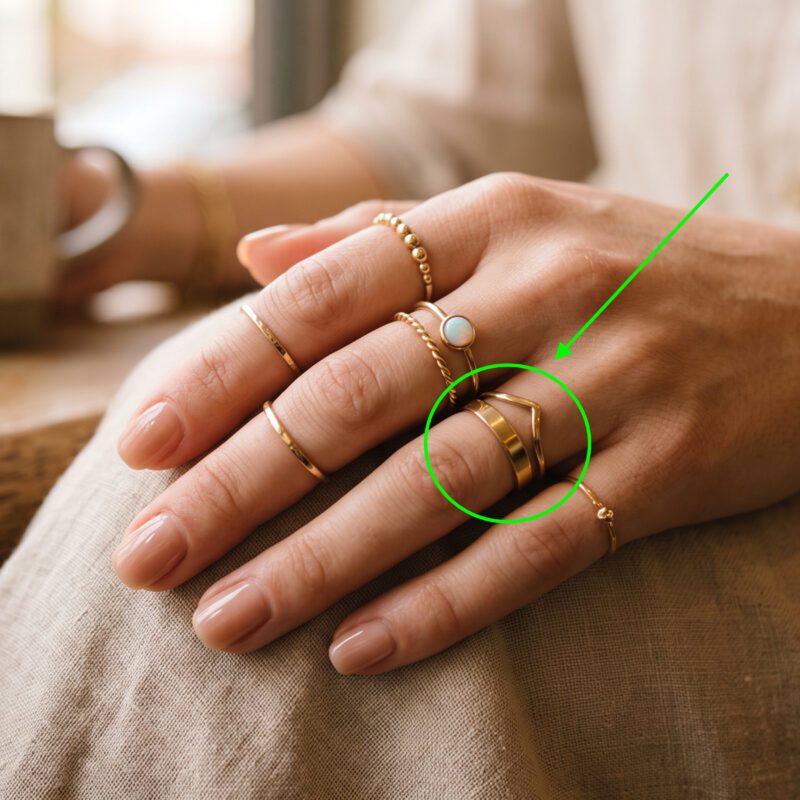
Rings they already have, from the correct finger.
2. Ask a Trusted Friend or Family Member
Your partner may have already discussed ring sizes with someone close to them. A best friend, sibling, parent, or other trusted family member might know their size—or may be able to find it out naturally without making your intentions obvious.
You can also ask whether they’ve ever gone ring shopping together. Someone who has helped your partner choose jewelry in the past may have useful information.
The advantage of this approach is that you’re not relying solely on your own guesswork. Just make sure you choose someone you trust to keep the proposal confidential. The best secret ring-size strategy doesn’t help much if the surprise is accidentally revealed.
3. Turn Ring Shopping Into a Casual Conversation
If you and your partner occasionally browse jewelry together, you may have an opportunity to learn their size naturally. For example, you could suggest looking at jewelry while shopping or visiting a store together. If your partner tries on rings, pay attention to what fits comfortably and whether a size is mentioned.
You don’t necessarily need to make the conversation about engagement rings. You could simply be curious about a piece of jewelry, a friend’s ring, or a style you noticed recently. The goal is to make the interaction feel natural rather than creating an elaborate story that could raise suspicion.
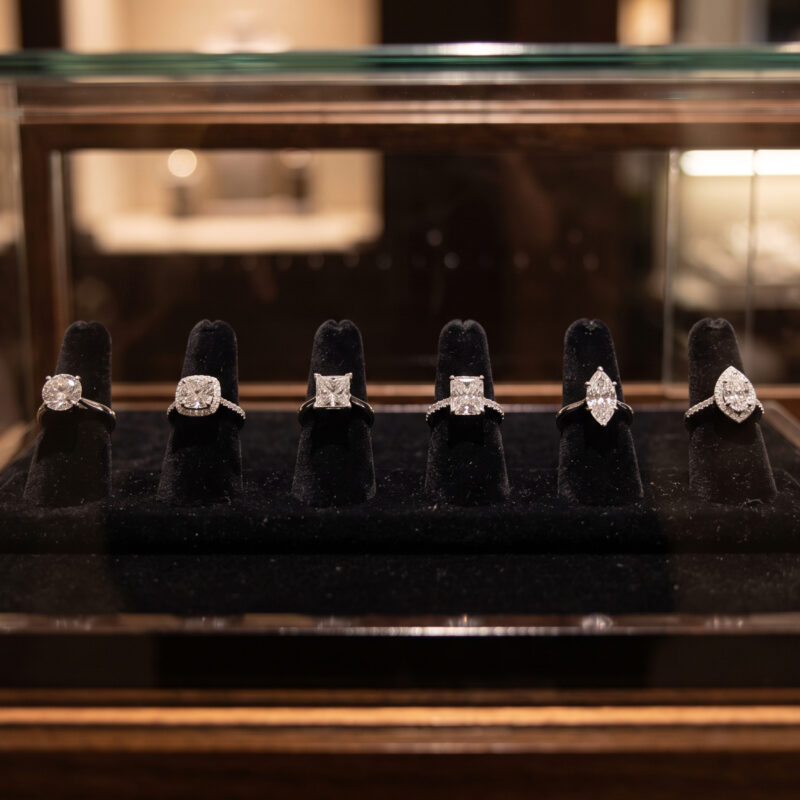
Engagement Ring Styles
This method can have another benefit: while you’re learning about sizing, you may also discover what styles your partner actually likes.
Pay attention to details such as:
- Platinum or Yellow, white, rose gold metal types
- Minimal or more detailed designs
- Round, oval, pear, emerald, or other diamond shapes
- Color stone or Birthstones
- Solitaire or multi-stone settings
- Low-profile or more prominent rings
Those details can be just as valuable when designing a custom engagement ring.
4. Compare Their Finger to a Ring You Know the Size Of
When you can’t borrow an existing ring, you may be tempted to compare your partner’s finger with your own. This can give you a rough visual estimate, but it shouldn’t be your first choice.
Finger proportions vary considerably from person to person, so looking at someone’s hand and deciding they are “probably a size 6” or “probably a size 8” isn’t a reliable sizing technique.
If you use this method, treat the result as a starting point rather than an exact measurement. A better alternative may be to compare their finger with a ring of known size. Even then, factors such as finger shape, knuckle size, and ring width can affect the final fit. Think of visual comparison as a backup plan not a substitute for professional measurement.
5. Let a Jeweler Help With the Best Estimate
If you’re unsure about the size, talk to a jeweler before finalizing the ring.
Bring any information you have, such as:
- An existing ring your partner wears
- The finger that ring came from
- Whether the existing ring fits snugly or loosely
- Your partner’s preferences for how their jewelry fits
- The approximate ring design you’re considering
An experienced jeweler can help you understand what information is useful and how the proposed engagement ring design may affect the fit. This is particularly helpful with a custom engagement ring, because sizing isn’t something that should be considered separately from the design. The width of the band, the shape of the interior, the setting, and other design characteristics can all influence how a ring feels on the finger.
What If You Can’t Get an Exact Ring Size?
Don’t panic. Many people proposing with an engagement ring don’t know their partner’s exact ring size. A well-informed estimate is often the reality when the proposal needs to remain a surprise.
The important thing is to let your jeweler know that the size is an estimate. Depending on the ring’s design and materials, it may be possible to resize the ring after the proposal. However, some designs have limited resizing options and may require the ring to be remade entirely. Certain intricate designs, eternity-style bands, unusual materials, and settings with stones extending around much of the band can present additional sizing costs.
That’s why it’s worth discussing sizing options with your jeweler before the ring is made. For a custom ring, planning ahead gives your jeweler an opportunity to consider both the design and the practicalities of achieving a comfortable fit.
Does Ring Band Width Affect Ring Size?
Yes. Band width can affect how a ring feels, even when the numerical ring size is the same. A very narrow band and a wide band may feel different on the same finger. Comfort-fit interiors can also change the way a ring sits and feels.
That’s why the “correct” size isn’t always just a number. A comfortable engagement ring should feel secure without being uncomfortably tight. It should also be able to pass over the knuckle without excessive difficulty. Your jeweler can take the specific ring design into consideration when discussing sizing.
What Is the Best Way to Secretly Find Ring Size?
If you’re wondering which method to try first, use this simple hierarchy:
| Method | Accuracy Potential | Best Use |
|---|---|---|
| Existing ring from the correct finger | High | Best option when available |
| Trusted friend or family member | Medium–High | When someone close may know |
| Casual jewelry shopping | Medium–High | When trying on rings feels natural |
| Comparison with another finger/ring | Low | Backup estimate |
| Jeweler-assisted estimate | High, depending on information | When you’re uncertain |
An existing ring from the correct finger is usually the strongest starting point. If you don’t have one, combine the information you can gather rather than relying on a single guess.
Common Ring-Sizing Mistakes to Avoid
Getting close to the right size is easier when you know what not to do.
Assuming every ring they own is the same size
It’s common for someone to wear different sizes on different fingers. Don’t automatically use the size of a ring from their middle or index finger.
Measuring a ring from the wrong finger
The closer the existing ring is to the intended finger, the more useful the measurement is likely to be.
Forgetting which hand the ring came from
Left and right hands aren’t always identical. Tell your jeweler which hand the existing ring was worn on.
Treating an estimate as an exact measurement
If you’ve estimated the size, say so. Giving your jeweler the full context helps them make a better recommendation.
Choosing the ring design without considering sizing
Some designs offer more flexibility for future resizing than others. This is one reason to discuss sizing early in the custom design process.
What Should You Do If You’re Still Unsure About the Size?
If you’ve tried everything and still don’t know the exact size, give your jeweler as much useful information as possible.
For example, if you have an existing ring, explain:
- Which finger it is worn on
- Which hand it is worn on
- Whether it fits snugly or loosely
- Whether it tends to spin
- Whether your partner prefers a tighter or looser fit
These details provide more context than simply saying, “I think they’re a size 7.” And remember: the goal is not to make the perfect guess in secret. The goal is to give your jeweler enough information to help create the best possible fit while preserving the surprise.
Finding the Right Size Is Only One Part of Creating the Ring
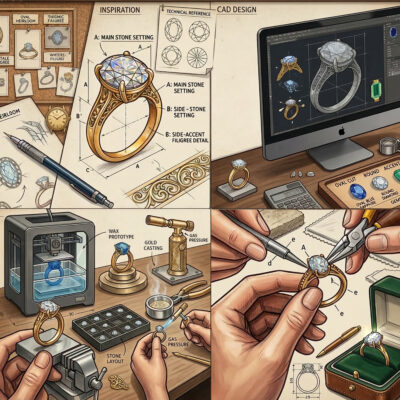
Finding your partner’s ring size secretly doesn’t have to be complicated, and it doesn’t need to prevent you from creating a meaningful engagement ring. Start with an existing ring if you can, involve someone you trust, or ask a professional jeweler to help you work with the information you have. A discreet estimate can be a perfectly reasonable starting point, especially when you’re creating custom jewelry from scratch. The ring will go through several stages, from the initial design concept and CAD development to approval, casting, stone setting, quality control, and delivery. Along the way, there are opportunities to discuss practical details such as the estimated ring size and make adjustments where possible. Because a custom engagement ring is created for one specific person, every detail matters from the metal and gemstone to the setting, proportions, band width, and overall design.
With guidance from an experienced jeweler, you can keep the proposal a surprise while making sure the finished ring feels personal, comfortable, and thoughtfully designed for the person you’re planning to spend your life with.
Frequently Asked Questions About Secretly Finding Ring Size
How can I find someone’s ring size without them knowing?
The most discreet approach is to borrow a ring they already wear on the intended ring finger and have a jeweler measure it. You can also ask a trusted friend or family member or look for a natural opportunity to have your partner try on rings.
Can a jeweler determine ring size from another ring?
Yes. A jeweler can professionally measure an existing ring. However, the measurement is most useful when the ring was worn on the same finger where the engagement ring will be worn.
Can I guess ring size based on height or weight?
Not reliably. Height, weight, and overall body type don’t provide a sufficiently accurate way to determine ring size. An existing ring or professional measurement is a much better approach.
What if the engagement ring is the wrong size?
Depending on the ring’s design and materials, it may be possible to resize it. However, resizing options vary. Discuss the possibilities with your jeweler before production, especially for a custom engagement ring.
Should an engagement ring be slightly loose or tight?
It should be secure enough that it doesn’t easily slip off but comfortable enough for normal wear. The ring should generally pass over the knuckle without excessive resistance. Because fingers can change size throughout the day and with temperature, a comfortable fit allows for some natural variation.
Is it better to size up or down if I’m unsure?
There isn’t one universal answer. The best choice depends on the ring’s design, band width, finger shape, and how much flexibility the finished ring has for resizing. Rather than automatically choosing a larger or smaller size, discuss the uncertainty with your jeweler.