The Ultimate Guide to Custom Engagement Rings: How to Design Your Own Engagement Ring
An engagement ring is more than a piece of jewelry; more importantly, it tells your story. Every milestone, inside joke, and shared dream deserves a ring as unique as your relationship.
That’s why many couples choose custom engagement rings instead of mass-produced designs. With a custom ring, you design every detail, from the gemstone and metal to hidden design elements, creating a one-of-a-kind engagement ring that reflects your story and becomes a lasting heirloom.
This guide explains everything you need to know about designing a custom engagement ring, including the process, gemstone selection, timeline, and factors that influence cost.

Design your custom engagement ring
What Is a Custom Engagement Ring?
Jewelers design a custom engagement ring specifically for one client, rather than offering pre-made inventory. Instead of choosing a finished ring, the client and jeweler create the design collaboratively.
Key Characteristics
-
Completely original design
-
Personalized gemstone selection
-
Choice of metal and ring setting
-
Tailored proportions and fit
-
Consideration for lifestyle and durability
Why Choose a Custom Engagement Ring?
Custom engagement rings offer advantages over store-bought rings in design, value, and personal meaning. They allow complete personalization, letting you tailor every design element from the diamond or gemstone, metal type, and band shape and width, to the setting style, hidden details, and personal engravings. As a result, the ring reflects the wearer’s personality, style, and aesthetic preferences, creating a truly unique and meaningful piece.
Better Control of Your Budget
With a custom ring, you control how your budget is spent, so you can prioritize the elements that matter most. For example, you might choose a higher-quality diamond cut for maximum sparkle, a larger center stone, more intricate design features, or premium metals like platinum. By making these choices, you ensure your budget goes toward creating the most meaningful and beautiful ring possible.
A Unique and Durable Engagement Ring
Couples can design a ring that reflects their story and stands apart from any other, ensuring every detail feels personal and meaningful.
Because engagement rings are worn every day, jewelers also focus on durability and practicality. They can tailor the design to your lifestyle, choosing low-profile settings for active wearers, bezel settings to protect the stone, and reinforced prongs for larger diamonds.
By combining exclusivity with thoughtful design, a custom engagement ring becomes both a beautiful and long-lasting symbol of your love.
The Custom Engagement Ring Process
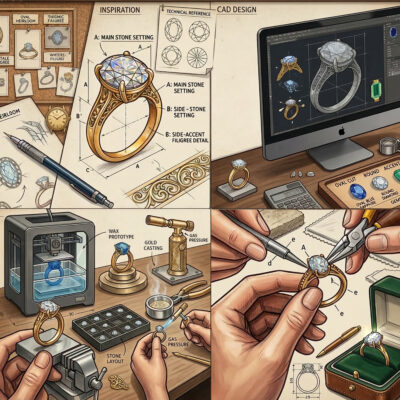
Designing a custom ring is a structured, collaborative process. Most rings take 4–8 weeks to complete, depending on complexity.
At a Glance: 6-Step Process
-
Design consultation
-
Diamond or gemstone selection
-
CAD 3D design
-
Wax model and casting
-
Stone setting and finishing
-
Final inspection and delivery
Step 1: The Design Consultation
The consultation helps the jeweler understand your vision, style, and budget.
Key Discussion Points
1. Design Inspiration: Photos of favorite rings, jewelry your partner already wears, or design styles (vintage, modern, minimalist) guide the creative direction.
2. Lifestyle Considerations: Rings are worn daily, so lifestyle matters. Low-profile rings suit active wearers; bezel settings protect stones; reinforced prongs support larger gems.
3. Metal Selection: Choices affect durability, color, and maintenance:
-
Platinum: Highly durable, naturally white, hypoallergenic
-
White Gold: Bright, modern appearance; may need occasional rhodium plating
-
Yellow Gold: Classic warmth, complements many skin tones
-
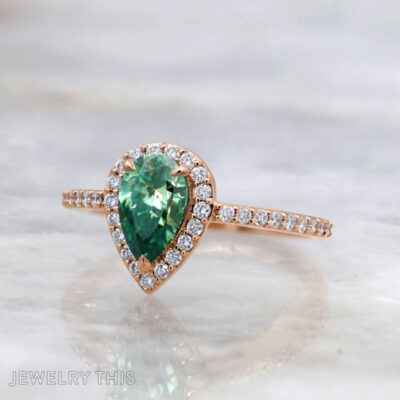
Rose Gold: Romantic pink tone, created with copper alloy
4. Budget Planning: Early discussion ensures the design aligns with your financial priorities, focusing on the stone, metal, or intricate design as desired.
Step 2: Selecting the Diamond or Gemstone
The center stone is the heart of your custom ring design and defines the engagement ring’ personality. While the market offers countless pre-set options, the custom design process gives you the unique ability to hand-select the exact stone that meets your criteria for sparkle and value.
Understanding the 4 Cs
- Cut: The most important C. This dictates the diamond’s brilliance and fire. A superior cut can make a smaller diamond appear larger and more radiant.
- Carat: The weight of the diamond. Your decision here often determines a large portion of the overall custom ring costs.
- Color: How colorless the diamond is (graded D-Z). Colorless diamonds (D-F) are rarer, but near-colorless stones (G-I) offer excellent value and often appear just as white, especially when set in white gold or platinum.
- Clarity: A measure of internal (inclusions) and external (blemishes) imperfections. Many inclusions are not visible to the naked eye, meaning you can save money by selecting a stone with slight imperfections that don’t compromise its beauty.
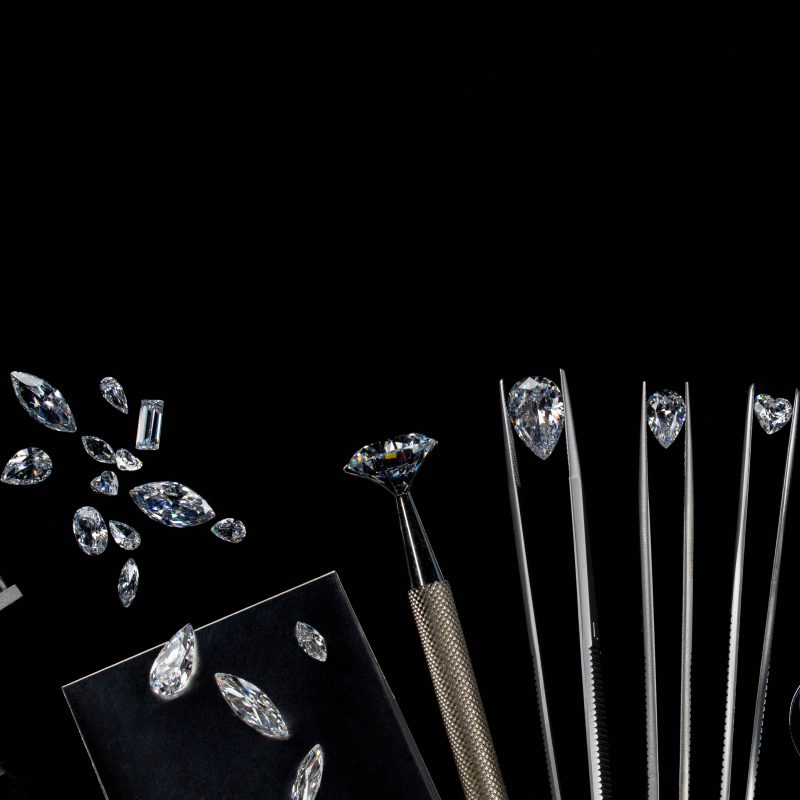
Diamond Cut and Shapes
Exploring Alternatives:
Don’t limit yourself to diamonds. Best gemstones for engagement rings include the hard, durable choices like sapphire and ruby, which offer a unique splash of color and can lower your overall budget, giving you the freedom to invest more in the intricacy of the metalwork.
Colored gemstones offer unique, personalized options:
-
Sapphires: Durable, available in many colors
-
Rubies: Rich red, highly durable
-
Emeralds: Vibrant green, perfect for vintage-inspired rings
-
Morganite: Soft pink tones, romantic design
Step 3: CAD Design
Once the overall style and stone are selected, the design moves into the technical phase. This is the stage where the vision is translated into a precise blueprint for the artisans.
The Role of Technology:
- CAD vs Hand-Drawn Jewelry Design: While initial concepts may be sketched by hand, modern custom jewelry design relies heavily on Computer-Aided Design (CAD). CAD is essential for the accuracy required to securely set a diamond and ensure symmetry in intricate details like pavé settings or detailed galleries.
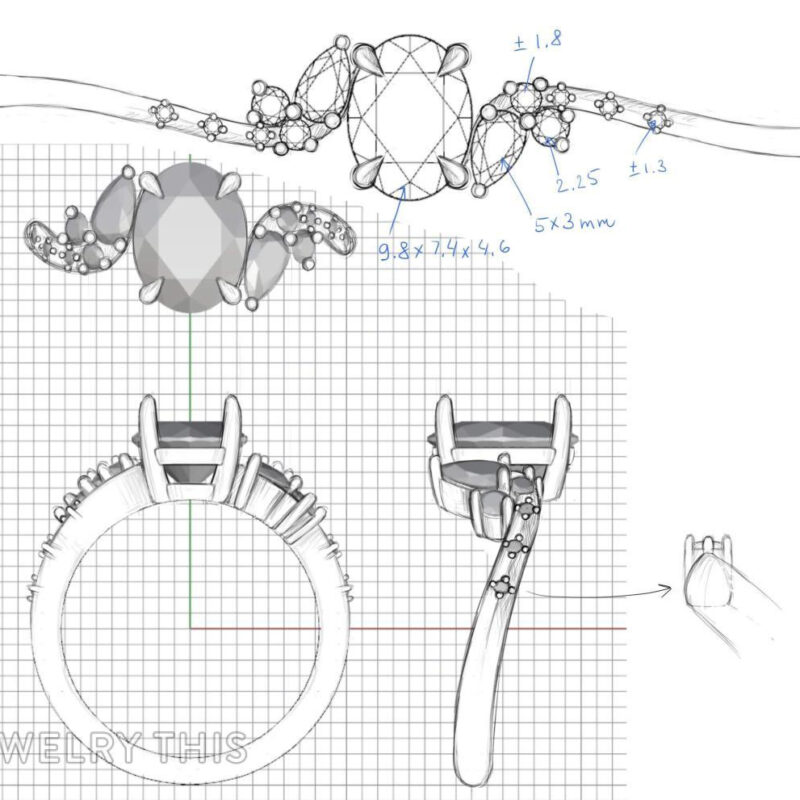
Hand drawn concept sketch of an engagement ring
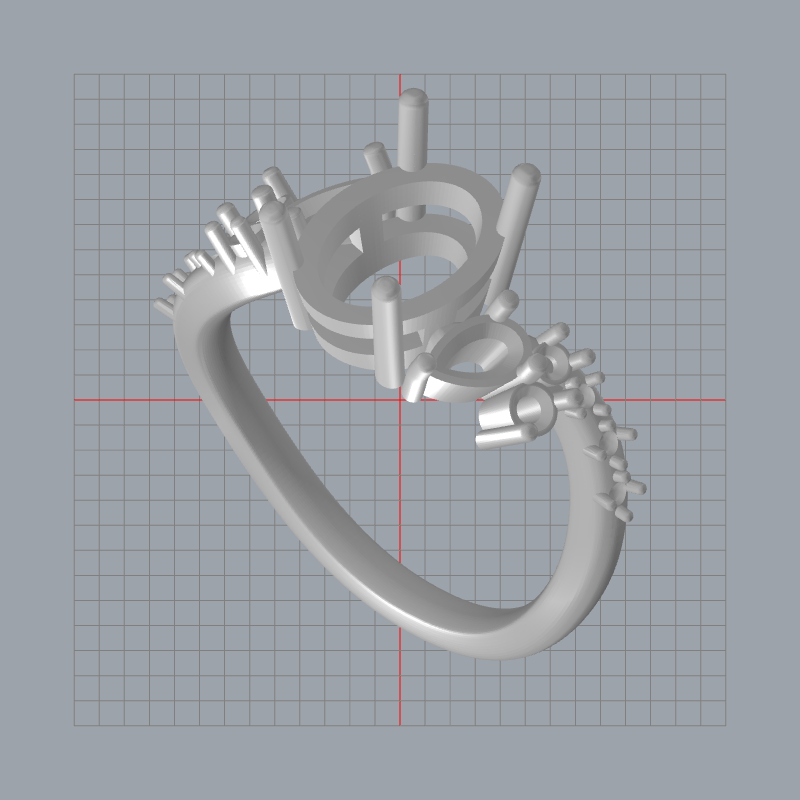
3D computer model of the engagement ring
- 3D Engagement Ring Design: The CAD software generates photo-realistic renderings. Often in multiple angles that show you exactly what the final custom made engagement ring will look like. You will see the prongs, the basket, and the precise measurements down to the millimeter.
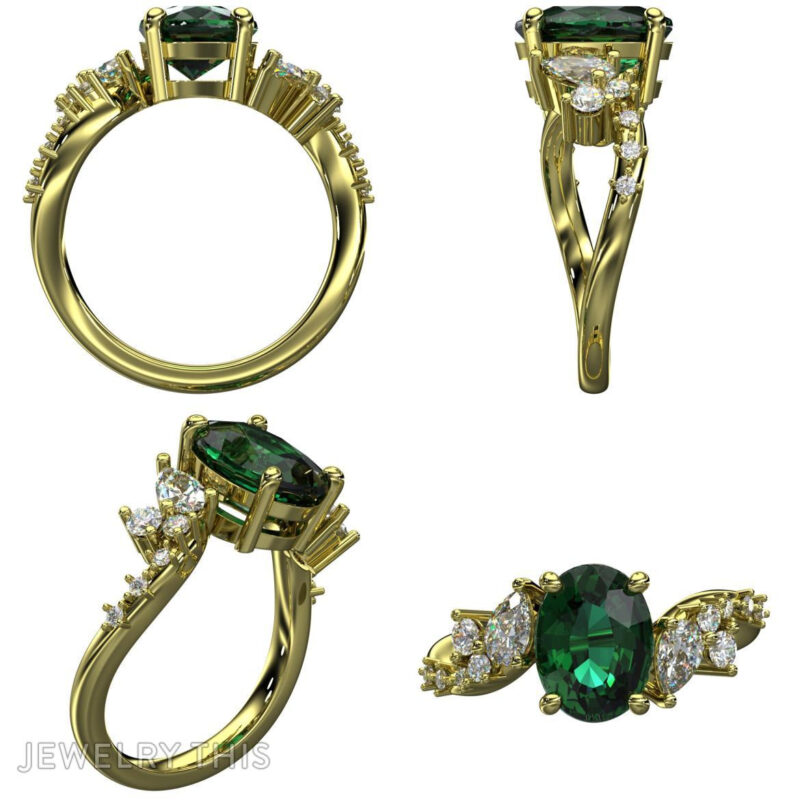
Photo – realistic image of the engagement ring
- The Approval Stage: You review the 3D images and provide feedback. Perhaps the band is too thick, or the prongs are too rounded. This is your opportunity to fine-tune before metal is cast. A reputable jeweler will not proceed until you have given explicit final approval on the 3D engagement ring design.
Step 4: Wax Model and Casting
Once approved and before the valuable metal is poured, a crucial checkpoint ensures dimensional accuracy and fit. Once the technical specifications are locked down via CAD engagement ring design, the ring moves from the screen to the bench. This is the stage where skilled artisans employ a combination of ancient techniques and modern precision to create the physical piece.
The Wax Model: The Physical Blueprint
The final 3D engagement ring design file is sent to a high-tech 3D printer. This printer builds an exact-scale replica of the ring in a specialized wax or resin. This physical wax model is a perfect proxy for the final ring and allows the jeweler and client to verify the proportions and comfort.
You may have the opportunity to see this model. It’s the final chance to check the height of the setting, the thickness of the band, and how the overall piece feels before it becomes permanent.
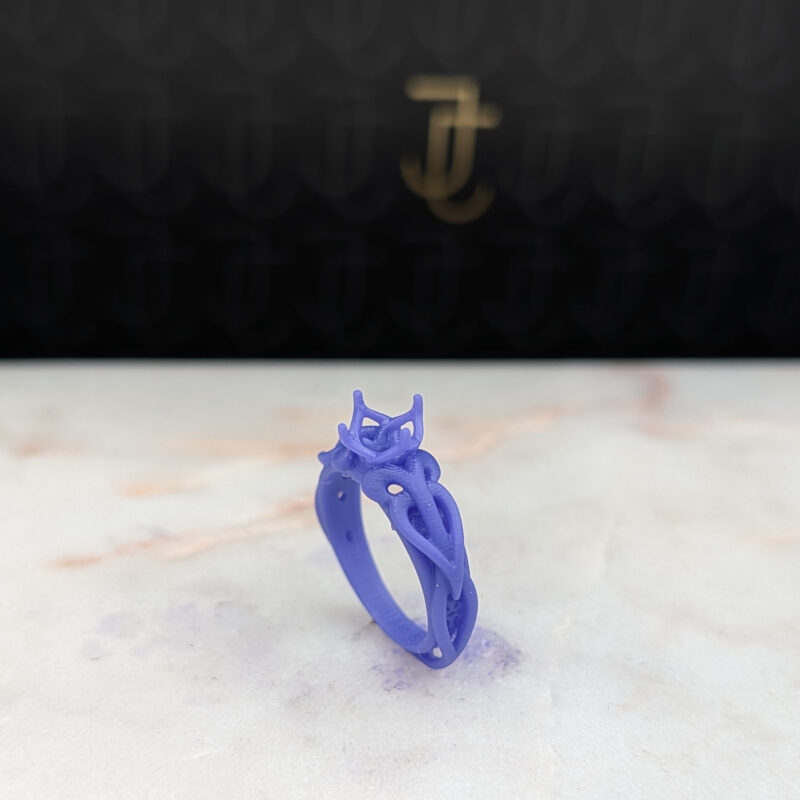
Wax model of an engagement ring
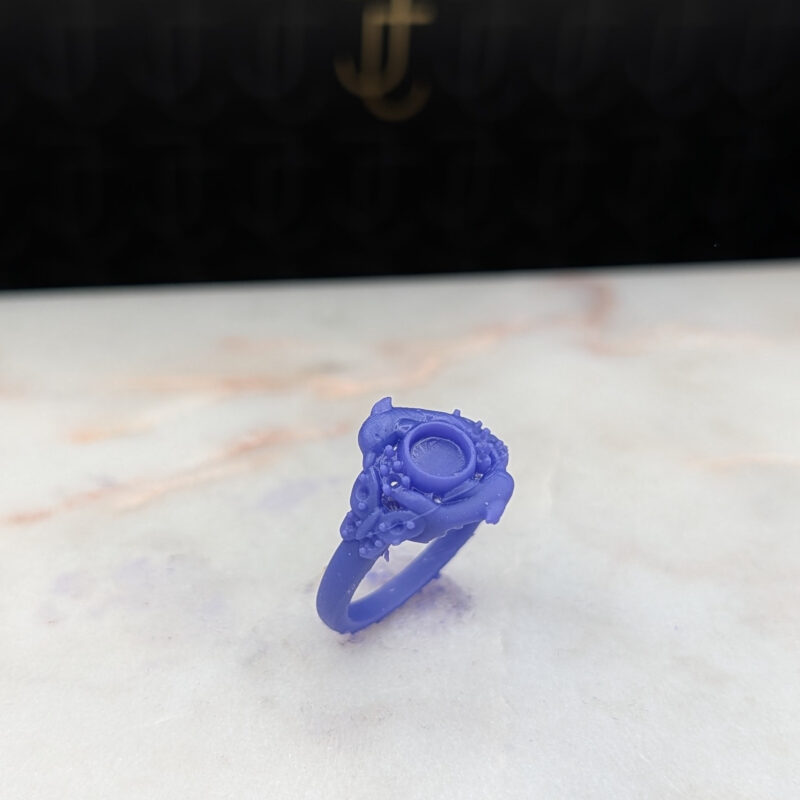
Wax model of an engagement ring
Lost-Wax Casting
The approved wax model is first encased in a plaster- like material called investment. Jewelers then heat the mold and melt and remove the wax, leaving a precise cavity in its place. Next, moletn metal is poured into the cavity, creating the structural foundation for setting the stones. This process, known as lost-wax casting, is the origin of the term “custom ring casting”
- Investment: The plaster mold is baked in a high-temperature kiln, melting and evaporating the wax (hence “lost wax”), leaving behind a perfectly formed cavity.
- Pouring the Metal: Molten metal—your chosen gold alloy (yellow, white, or rose gold) or platinum—is poured directly into the cavity.
- Reveal: Once cooled, the investment is shattered, revealing the newly cast metal ring structure. This raw casting is the physical, permanent foundation of your custom made engagement ring.
Step 5: Stone Setting and Finishing
After casting, skilled jewelers:
-
Set center and accent stones securely
-
Shape prongs or bezels for durability
-
Add intricate details such as pavé or halo settings
-
Polish the metal and perform final finishing
-
Apply rhodium plating if necessary
The casting is just the beginning. The next steps require immense precision and artistry, transforming a piece of raw metal into a sparkling heirloom. This is where the jeweler’s expertise truly shines, justifying the labor-intensive nature of bespoke engagement rings.
The Art of Setting
The center stone and any accent stones (like those in a pavé or halo) must be set by a master stone setter.
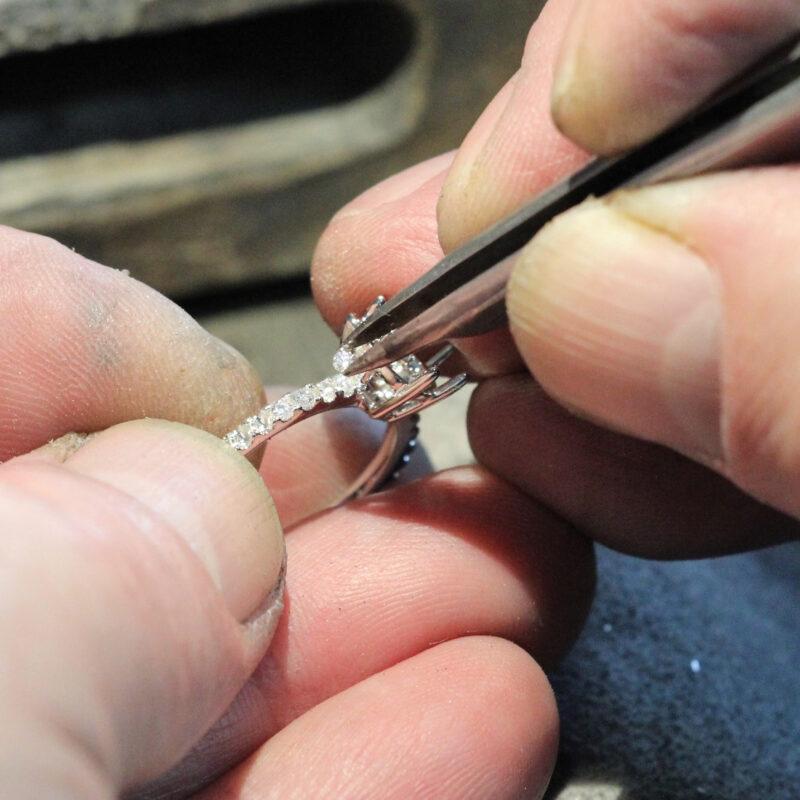
Engagement ring with a diamond pave band being set
- Secure Placement: The setter meticulously carves seats into the metal for each diamond or gemstone. Using specialized tools, they gently push and shape the metal (prongs or bezels) over the stone’s girdle, ensuring the stone is secure enough to last a lifetime.
- Intricate Details: For unique ring settings like pavé or micro-pavé, a master jeweler positions hundreds of tiny diamonds with microscopic metal beads—a delicate, highly skilled process that defines a truly handmade engagement ring.
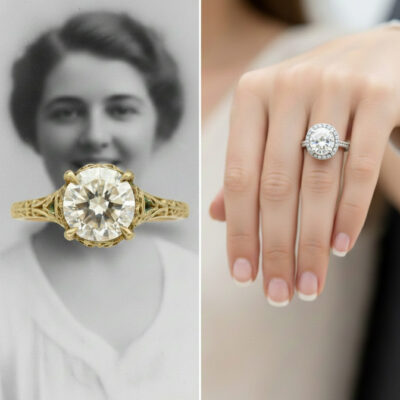
- The Heirloom Stone: If you are creating an heirloom diamond custom ring, the setting phase is particularly sensitive. The jeweler must design prongs or a bezel that accommodates the specific, and often less standardized, cut of an antique stone while protecting its historic integrity.
The Final Polish
The ring is cleaned, polished, and finished. In addition if it’s white gold, it receives its final rhodium plating. This stage removes any microscopic tool marks and brings the metal to a high luster, allowing the diamonds to reflect maximum light.

Our Master Goldsmith Polishing A Custom Engagement Ring
Step 6: Final Inspection and Delivery
Before delivery, the ring is:
-
Checked for stone security
-
Inspected for structural integrity
-
Measured against the approved design
Certified diamonds may include official grading reports. Once verified, the ring is ready for your special moment.
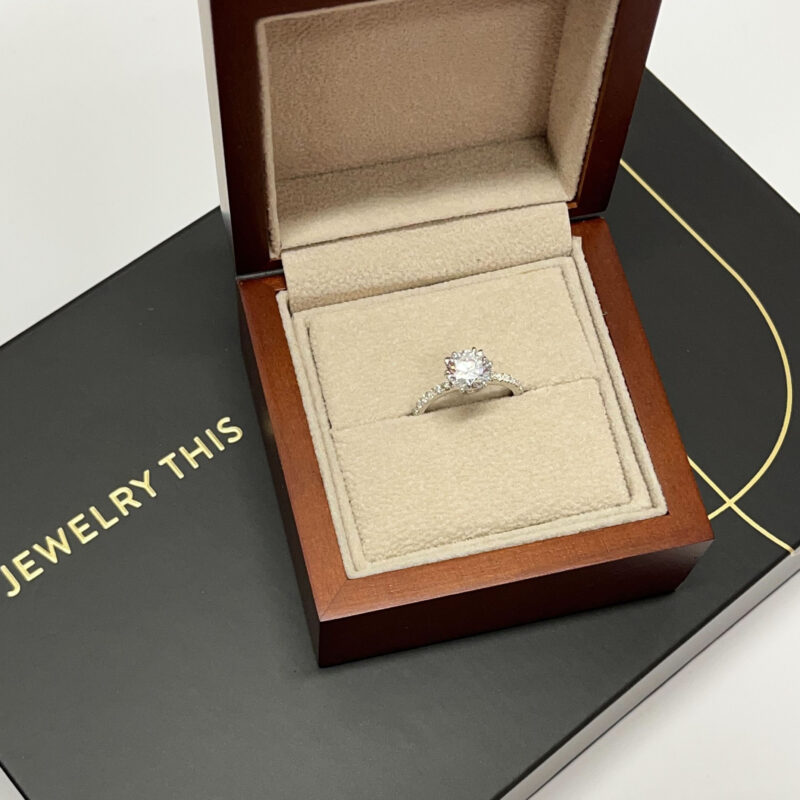
Finished engagement ring boxed and ready for shipping.
- Final Inspection: During the final inspection, the jeweler reviews your custom engagement ring against the original CAD design and specifications, verifies every detail is perfect, and boxes it so you can collect it and begin the next chapter of your story.
What Affects the Cost of Custom Engagement Rings?
Pricing depends on several factors:
- The Center Stone (60–80% of Cost): The specific size, quality, and origin of the diamond or gemstone are the largest expense. Choosing a diamond for a custom ring lets you optimize this value.
- Design Complexity: Highly detailed work, such as custom hand-engraving, intricate pavé work, elaborate filigree, or creating a complicated three-stone setting, increases labor hours and, therefore, the cost. A simpler solitaire will always be more affordable.
- Metal Choice: Platinum is denser and more expensive than gold. The higher the karat of gold (18k vs. 14k), the higher the material cost.
- Time and Revisions: Excessive back-and-forth during the engagement ring design process or multiple changes after the 3D engagement ring design approval can add to the final price, which is why clear communication is essential.
Furthermore, in fact, custom rings often deliver better value than store-bought rings because they allow you to direct your budget toward materials and craftsmanship rather than retail markups.
Weighing the Investment -Understanding Custom Ring Costs and Value
A common misconception is that a custom engagement ring is prohibitively expensive. In reality, the cost can be highly controlled, often offering superior value compared to off-the-shelf options.
Cost of Custom Engagement Ring vs Store-Bought
The most significant factor influencing the price difference is the supply chain and markup.
| Factor | Off-the-Shelf (Retail) | Custom Made Engagement Ring (Direct to Jeweler) |
| Supply Chain | Manufacturer → Distributor → Retail Store → Customer (Multiple Markups) | Client → Designer/Bench Jeweler → Customer (Fewer Markups) |
| Control Over Materials | Limited to available inventory; stone quality is pre-set. | Total control; can prioritize factors like better cut or lab-grown for value. |
| Labor Costs | Hidden in the final price; mass-production labor often outsourced. | Transparent design and labor fees; reflects the artisan’s time and skill in custom jewelry process. |
| Design Exclusivity | Zero—hundreds of the same ring exist. | 100% exclusive; it’s a bespoke engagement ring designed once. |
Benefits of Custom vs Off-the-Shelf Engagement Rings
ExclusivityTruly unique engagement rings.Found in dozens of stores or websites.
| Feature | Custom Engagement Ring | Off-the-Shelf Ring |
|---|---|---|
| Meaning & Sentiment | Incorporates personal symbols, birthstones, or heirloom diamond history. | No personal story; standard commercial product. |
| Perfect Fit | Designed exactly to fit a specific center stone; perfectly sized and proportioned for the wearer. | Standardized settings; resizing and fitting can compromise structural integrity. |
| Durability | Prongs and setting designed for the wearer’s lifestyle (e.g., low-profile bezel for active individuals). | Standard settings designed for general use; may be less durable if resized or worn during active lifestyles. |
Designing a Ring That Tells Your Story
A custom engagement ring is more than jewelry it symbolizes your love and shared future. By participating in the design process, you shape a ring that reflects your style, your memories, and your partner’s personality. When you create custom jewelry, such as an engagement ring, you give life to a meaningful heirloom that will be cherished for generations.
>Frequently Asked Questions
How long does it take to make a custom ring?
4–8 weeks on average; complex designs may take longer.
Are custom rings more expensive?
Not necessarily. Costs depend on gemstone, metal, and design complexity.
Can I use an heirloom diamond?
Yes. Jewelers can reset heirloom stones into modern, custom settings.
What metals are best?
Platinum is most durable; white, yellow, and rose gold offer aesthetic variety.
Can I see the ring before it’s made?
Yes. Most jewelers provide 3D CAD renderings and wax models for approval.
Can hidden details be included?
Yes. Hidden diamonds, engravings, or symbolic elements are common in custom designs.