The Ultimate Guide to Designing a Custom Engagement Ring
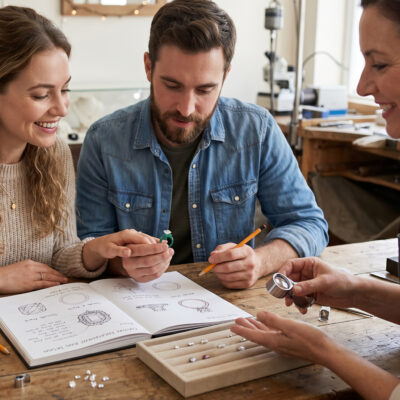
Designing a custom engagement ring allows you to create a piece of jewelry that reflects your personal style, lifestyle, and story. Unlike pre-made rings, a custom design gives you full control over every detail, including the gemstone, diamond shape, setting, and metal type.
This guide explains every step of the process in a structured way so you can confidently design a ring that is both meaningful and practical.
1. Understanding the Custom Engagement Ring Process
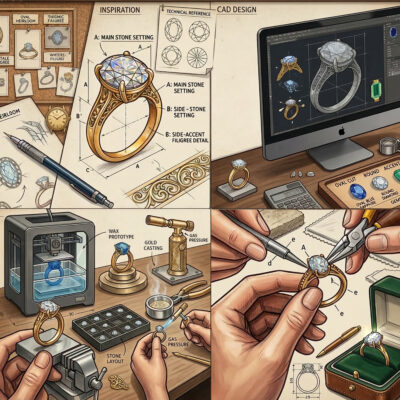
A custom engagement ring is created through a structured design workflow that transforms an idea into a finished piece of jewelry.
Typical custom ring process:
| Stage | Description | Duration |
|---|---|---|
| Private Consultation | A personalised consultation to explore your vision, design direction, stone and selection, and budget | 1–3 days |
| Design Development | Initial concept sketches and curated gemstone sourcing tailored to your design | 1–3 days |
| CAD Modeling | Precision 3D modelling of your ring, refined in detail for your approval | 5–7 days |
| Final Approval | Collaborative refinement to perfect every detail before production begins | 1–3 days |
| Custom Production | Expert crafted creation, including stone setting, finishing, and high-polish refinement | 10–14 days |
| Presentation & Delivery | Rigorous quality inspection, elegant packaging, and secure delivery | 3–5 days |
Understanding this process helps you make informed design decisions and avoid unrealistic expectations.
To explore this in more detail, see our full guide on the custom engagement ring making process.
2. Define Your Engagement Ring Style
Your style determines the overall direction of your ring design. Before selecting gemstones or settings, it is important to identify what aesthetic suits you best.
Common engagement ring styles:
| Style | Description |
|---|---|
| Minimalist | Clean, simple, modern design |
| Vintage | Detailed, antique-inspired design |
| Modern | Bold shapes and contemporary structure |
| Nature-inspired | Organic, floral, or natural elements |
| Statement | Unique, bold, eye-catching designs |
Each style influences your choice of stone, setting, and metal.
To better understand which design direction suits you, explore what these 5 custom engagement ring styles say about your style to identify the aesthetic that best matches your personality.
3. Choose the Right Center Stone
The center stone is the focal point of the engagement ring and defines its identity.
While diamonds are the traditional choice, many couples are now choosing alternative gemstones for individuality and colour variety.
Gemstone comparison:
| Stone | Durability | Appearance | Key Advantage |
|---|---|---|---|
| Diamond | Very high | Classic brilliance | Timeless durability |
| Sapphire | Very high | Multiple colours | Strong and versatile |
| Ruby | High | Deep red tone | Bold romantic symbolism |
| Emerald | Medium | Rich green | Luxury appearance |
| Morganite | Medium | Soft pink | Romantic aesthetic |
| Moissanite | Very high | Bright sparkle | Cost-effective alternative |
Choosing between diamond and non-diamond stones
- Diamonds are best for durability and tradition
- Non-diamond gemstones offer colour, uniqueness, and value flexibility
If you’re considering alternative gemstones beyond diamonds, our guide on creating a unique engagement ring with non-diamond gemstones explores sapphire, ruby, emerald, and other options in detail.
4. Select the Right Diamond Shape
Diamond shape has a major impact on appearance, perceived size, and overall style.
Diamond shape comparison:
| Shape | Overall Appearance | Sparkle Style | Style Personality | Value Efficiency |
|---|---|---|---|---|
| Round Brilliant | Classic, perfectly symmetrical | Maximum brilliance and fire | Timeless, traditional, iconic | Moderate (highest demand, premium pricing) |
| Oval | Elegant, elongated silhouette | Strong sparkle with soft brilliance | Modern, flattering, refined | Excellent (high visual impact for carat weight) |
| Cushion | Soft corners, romantic vintage feel | Warm, soft sparkle | Romantic, antique-inspired | Good |
| Pear | Teardrop shape, unique and fluid | Bright, directional sparkle | Bold, feminine, distinctive | Very good |
| Emerald | Clean, step-cut elegance | Subtle, mirror-like flashes | Sophisticated, minimalist, luxury | Good (focus on clarity over sparkle) |
| Marquise | Dramatic, elongated with pointed ends | High brilliance and light return | Bold, elongating, statement style | Excellent (maximum visual spread) |
| Princess | Sharp, modern geometric square | High sparkle with crisp flashes | Contemporary, structured, edgy | Good |
Different diamond shapes create completely different visual effects even at the same carat weight, which is why understanding diamond size vs value: what you need to know can help you make a more informed and cost-effective choice.
5. Match Diamond Shape to Your Hand
Diamond shape should not only be chosen based on cost or sparkle but also on how it complements your hand.
Best diamond shapes by hand type:
| Hand Type | Recommended Shapes |
|---|---|
| Short fingers | Oval, pear, marquise |
| Long fingers | Round, cushion, princess |
| Wide fingers | Emerald, oval, marquise |
| Small hands | Round, cushion, oval |
Choosing the right shape enhances balance and proportion, which is why understanding how to choose the perfect diamond shape? discover what suits your hand best can help you select a design that flatters your hand structure.
6. Choose the Perfect Engagement Ring Setting
The setting determines how the stone is held, how secure it is, and how much it sparkles.
Popular settings:
- Solitaire
- Halo
- Pavé
- Three-stone
- Bezel
- Cathedral
Setting comparison:
| Setting | Sparkle | Protection | Maintenance |
|---|---|---|---|
| Solitaire | High | Medium | Low |
| Halo | Very high | Medium | Medium |
| Pavé | Very high | Medium | High |
| Three-stone | High | Medium | Medium |
| Bezel | Medium | High | Low |
Each setting creates a different balance of security, sparkle, and style, which is why understanding discover your perfect engagement ring setting can help you choose the right design for both aesthetics and durability.
7. Choose the Right Metal
Metal choice affects durability, colour, and long-term wear.
Gold purity comparison:
| Metal | Gold Content | Durability | Best Use |
|---|---|---|---|
| 14K Gold | 58.3% | Very high | Daily wear |
| 18K Gold | 75% | High | Luxury balance |
| 22K Gold | 91.6% | Medium | Traditional jewellery |
| 24K Gold | 99.9% | Low | Investment pieces |
Recommendation:
- 14K gold is best for durability
- 18K gold is best for luxury appearance
Because gold purity influences durability, appearance, and everyday wear, exploring 14K, 18K, 22K, 24K gold: what is the difference and which should you choose helps you choose the most suitable metal for your lifestyle and design preferences.
8. Use AI to Design Your Engagement Ring
AI tools can help you visualise ideas before committing to a final design.
They are useful for:
- Exploring different styles
- Testing gemstone combinations
- Visualising settings
- Communicating ideas to jewellers
Example AI prompts:
- Vintage oval sapphire ring with yellow gold and milgrain detailing
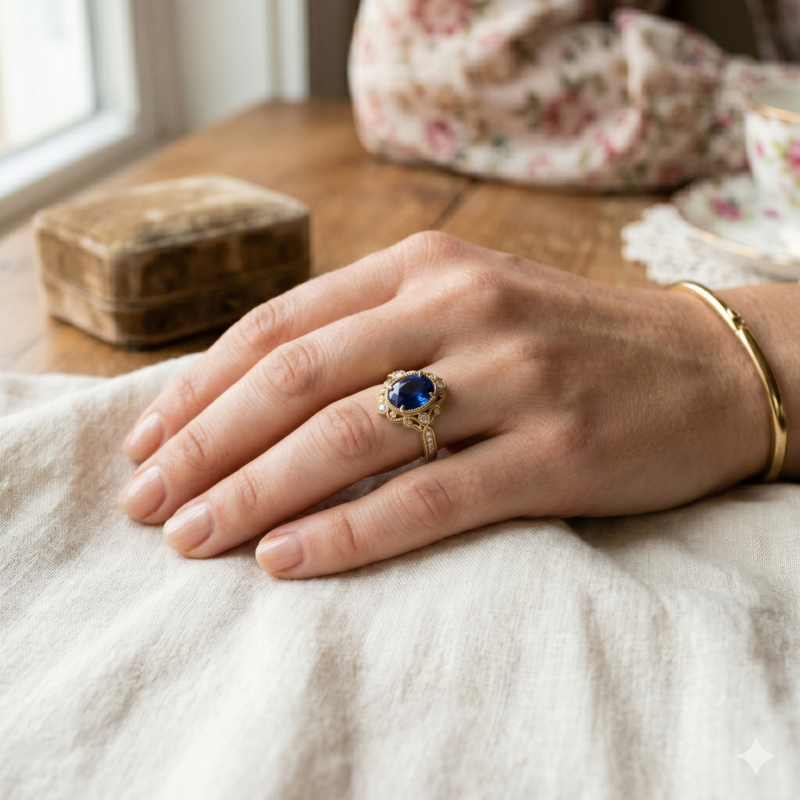
Ai generated engagement ring inspiration
- Minimalist emerald cut diamond solitaire in platinum
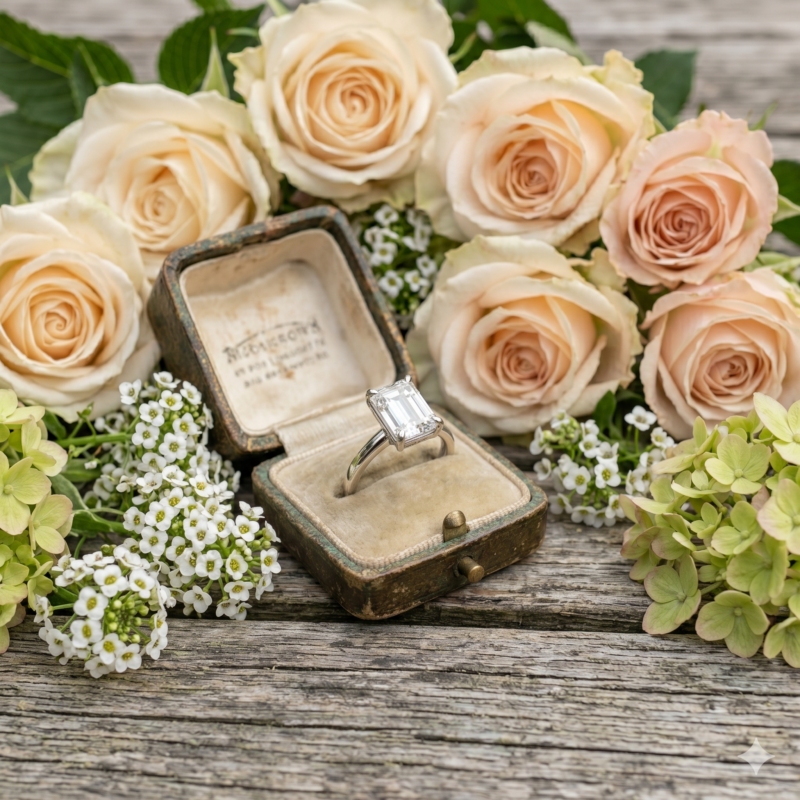
Ai generated engagement ring inspiration
- Nature-inspired ring with leaf motifs and pear-shaped stone
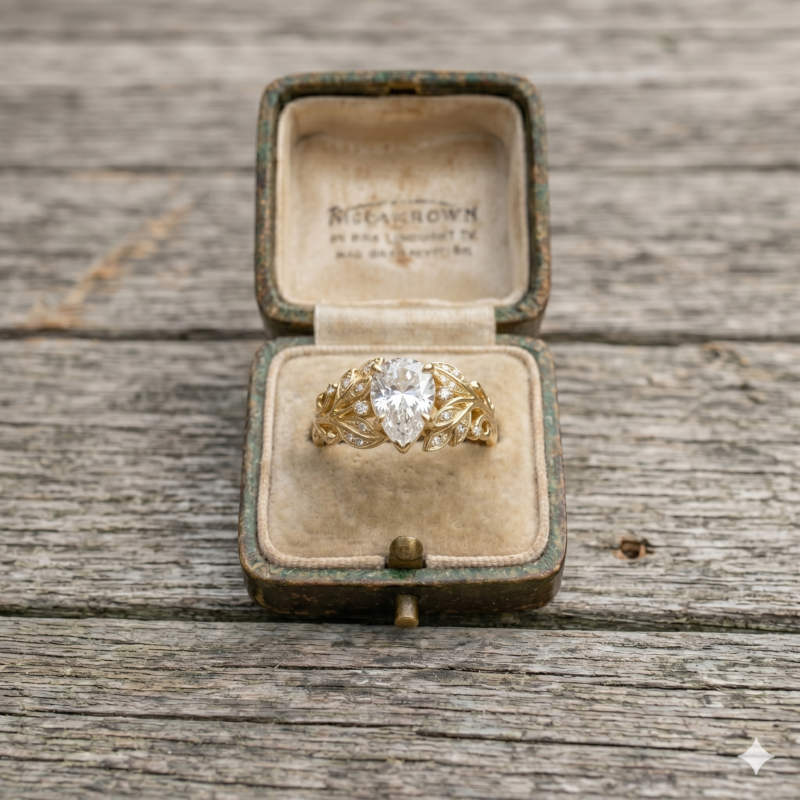
Ai generated engagement ring inspiration
AI tools can be a powerful way to explore design ideas before committing to a final concept, and 7 AI prompts that will help you design your engagement ring provides practical prompts to help you visualise different styles and combinations.
9. Design Around Your Lifestyle
A beautiful ring should also be practical for daily wear.
Best design choices for active lifestyles:
- Bezel settings (maximum protection)
- Low-profile designs (less snagging)
- Durable metals like 14K gold
- Hard gemstones like diamond or sapphire
Lifestyle recommendations:
| Lifestyle | Best Design Type |
|---|---|
| Healthcare | Bezel setting |
| Fitness | Low-profile solitaire |
| Hands-on work | Protective bezel |
| Office work | Classic halo or solitaire |
For more guidance, read best engagement ring styles for people who use their hands daily.
10. Common Mistakes to Avoid
Many people make avoidable mistakes when designing custom engagement rings:
- Prioritising size over comfort
- Choosing fragile gemstones for daily wear
- Ignoring lifestyle needs
- Following trends instead of personal style
- Not considering wedding band pairing
- Overlooking maintenance requirements
Good design balances beauty, durability, and practicality.
Frequently Asked Questions
How much does a custom engagement ring cost?
Custom rings vary widely depending on materials, design complexity, and gemstones.
How long does a custom engagement ring take?
Most rings take 4–10 weeks from design to completion.
Are custom engagement rings more expensive?
Not necessarily. They can often be designed within similar budgets to retail rings.
What is the most durable gemstone?
Diamond is the hardest, followed closely by sapphire and ruby.
Can I use a non-diamond gemstone?
Yes, many modern engagement rings use sapphires, emeralds, moissanite, and other gemstones.
What setting is most secure?
Bezel settings provide the highest level of protection.
What diamond shape looks largest?
Oval, marquise, and pear shapes tend to appear largest for their carat weight.
What gold is best for engagement rings?
14K is best for durability, while 18K offers a richer appearance.
Can AI help design engagement rings?
Yes, AI can generate concepts and visual inspiration for your jeweller.
What is the first step in designing a custom ring?
Start by identifying your style and gathering inspiration before consulting a jeweller.
Final Thoughts
Designing a custom engagement ring is a structured creative process that combines personal style, gemstone selection, diamond shape, setting choice, metal type, and lifestyle considerations.
By understanding each step in detail, you can create a ring that is not only visually beautiful but also practical and meaningful.
To go deeper into each stage of the process, explore the linked guides throughout this article and build your perfect custom engagement ring step by step.
If you’re ready to take the next step, you can create custom jewelry that is designed specifically around your vision, style, and story.