How to Clean Fine Jewelry

Keeping your fine jewelry sparkling doesn’t have to be complicated. With a few simple techniques and common household items, you can safely clean and polish your gold, silver, platinum, and gemstone pieces at home. These expert tips will help your jewelry shine while protecting your investment.
1. How to Clean Precious Metals
Fine jewelry is crafted from metals like gold, silver, platinum, and titanium. Each requires slightly different care to maintain its luster.
Gold Jewelry
- Mix a few drops of mild dish soap with warm water.
- Soak gold pieces for 4–5 minutes.
- Gently brush crevices with a soft toothbrush.
- Rinse and buff dry with a lint-free cloth.
- Tip: For tarnished gold, add a drop of ammonia—but sparingly to avoid loosening gemstones.
Silver Jewelry
- Soak silver in warm, soapy water and rinse with cool water.
- For stubborn tarnish, make a paste of baking soda and gently rub with a soft cloth.
- Buff dry to restore shine.
Platinum Jewelry
- Use warm, soapy water and a soft toothbrush for intricate designs.
- Rinse thoroughly and dry with a lint-free cloth.
Titanium Jewelry
- Clean with dish soap and warm water.
- Rinse and buff dry to prevent water spots.
- Ammonia or Windex can remove tough grime if needed.
2. How to Clean Gemstones
Gemstones vary widely in hardness and sensitivity, so proper care is essential.
Diamonds
- Soak in warm, soapy water for 20–30 minutes.
- Brush gently under the setting to remove dirt.
- Dry with a soft, lint-free cloth.
Pearls
- Never soak pearls.
- Wipe gently with a damp chamois cloth and a small amount of mild soap.
- Dry carefully with a soft cloth.
Soft or Sensitive Gemstones
- Stones like opals, turquoise, coral, amber, ivory, and lapis lazuli should only be wiped clean with a damp cloth.
- Avoid soaking or harsh chemicals.
3. Ultrasonic Jewelry Cleaners
For people that possess a lot of jewelry and wear it frequently, an ultrasonic jewelry cleaner might be the best option for cleaning their jewelry. Ultrasonic cleaners simplify the cleaning task because the jewelry doesn’t have to be disassembled to be cleaned and it allows for cleaning several pieces at the same time. When you invest in an ultrasonic cleaner, you can also end up saving money as jewelers often require a fee for jewelry cleaning services, especially if the jewelry that needs cleaning wasn’t purchased at their store. Ultrasonic cleaners work by creating waves that then create bubbles. When the bubbles break they release energy that collides with the jewelry and knocks the dirt, grime and oil off of the jewelry and out of all its nooks and crevices. The result is clean and brand-new looking jewelry.
A word of caution: It’s extremely important to follow the manufacturer’s instructions for cleaning your jewelry piece in an ultrasonic cleaner, taking care to follow specific instructions for specific metals and gemstones. And while most types of jewelry come out beautifully after being in an ultrasonic cleaner, some types of gemstones shouldn’t be cleaned this way. For example, don’t use an ultrasonic cleaner for softer gemstones such as opals, pearls, coral, amber, lapis lazuli, emeralds and turquoise. Gemstones whose color has been enhanced through heat treatment should also not be cleaned by an ultrasonic cleaner.
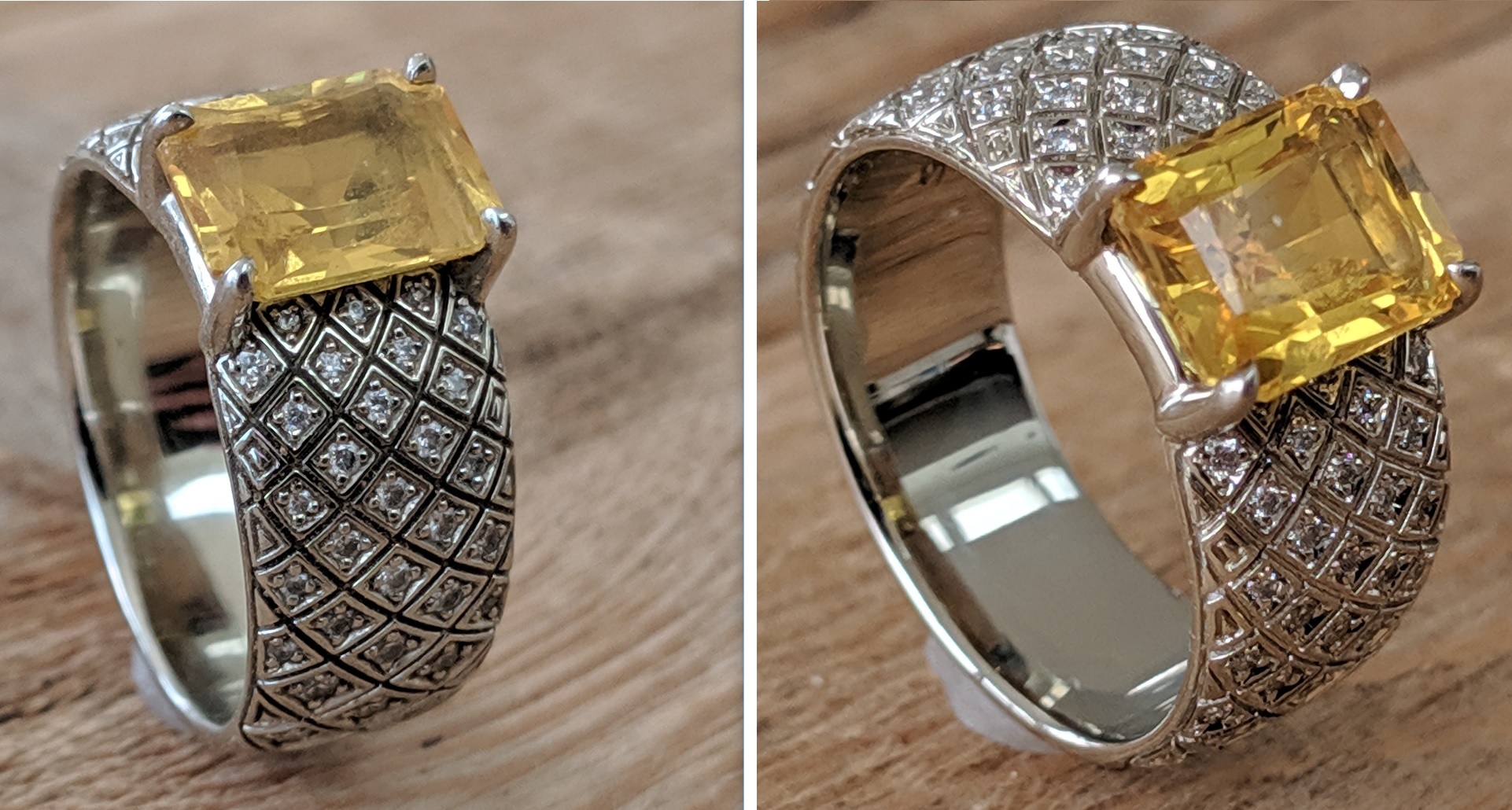
See for yourselves the difference it makes when you clean the fine lines between stone settings:
-

- The difference between clean and unclean fine jewelry
4. Designing Jewelry That’s Easy to Clean
One of the most difficult aspects of cleaning fine jewelry is reaching the tiny nooks and crannies where dust and grit tend to collect. At Jewelrythis, we design our jewelry with this in mind, creating models that are not only beautiful and comfortable to wear but also easy to clean and polish:
- Smooth settings for easier cleaning
- Comfortable designs that don’t trap debris
- Durable craftsmanship for long-lasting shine
Create custom jewelry that’s not only stunning but also effortless to maintain.
FAQ: Fine Jewelry Cleaning
How often should I clean my fine jewelry?
Light cleaning every 2–4 weeks keeps jewelry sparkling. Deep clean gemstones or heavily worn pieces every 3–6 months.
Can I use toothpaste to clean my jewelry?
No—abrasive toothpaste can scratch metals and gemstones. Stick to mild dish soap or a specialized jewelry cleaner.
Is professional cleaning necessary?
Occasional professional cleaning ensures settings are secure and gemstones are protected. Ultrasonic cleaners can supplement but not fully replace expert care.
How do I prevent tarnish on silver jewelry?
Store silver in anti-tarnish pouches or cloth, avoid exposure to moisture, and clean regularly.